


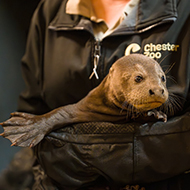
The birth brings hope for this rapidly declining species.
Conservationists at Chester Zoo have hailed the birth of three giant otters as “a hugely special moment”, marking the first time the species has been born at the zoo in several years.
Rachael Boatwright, assistant team manager of carnivores at Chester Zoo, said the triplets “are healthy and thriving” and will soon be able to explore the great outdoors.
The pups, who have yet to be named, were born to first-time parents, Bonita and Manu, as part of an international conservation effort to boost the species. With fewer than 5,000 giant otters thought to remain in the wild, this latest arrival is considered to be a rare boost for the species.
Ms Boatwright said: “The pups recently had their very first health check-up at eight weeks old, where they were weighed and had their heart, teeth and overall condition assessed by the zoo’s vets. We’re delighted to confirm that all three are healthy and thriving- and that we have two male and one female pup.
“At eight weeks old, the pups will now start to venture outside alongside parents Bonita and Manu, who will start introducing them to the water and all of the essential skills they’ll need as they grow.”
Native to South America, giant otters have been disappearing entirely from parts of their former range owing to deforestation, water pollution and illegal hunting. The species is listed as endangered by the International Union for the Conservation of Nature (IUCN), meaning that, without urgent conservation action, it could be wiped out entirely.
Kirsten Pullen, chief conservation officer at the zoo, said: “Every birth represents genuine hope for this highly endangered species, and these three giant otter pups are an important reminder of what conservation efforts around the world can achieve.
“Wild giant otter populations are facing enormous pressure from widespread habitat loss and pollution in their freshwater ecosystems, so the international conservation breeding programme has become a vital safety net for the species.
“By maintaining healthy, genetically diverse populations in conservation zoos like ours, while also supporting efforts to protect and restore habitats in the wild, we’re hopeful that giant otters can thrive long into the future.”
Image (C) Chester Zoo.


 Companies marketing medicines for small pets exempt from authorisation must submit their annual return to the Veterinary Medicines Directorate (VMD) by 30 November 2026.



