


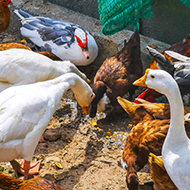
Scrupulous biosecurity remains the best way to mitigate disease spread.
The UK’s deputy chief veterinary officer is urging bird keepers to remain vigilant as mandatory housing measures for poultry and captive birds across England and Wales come to an end.
Jorge Martin-Almagro said that although the risk to poultry has reduced “there remains a risk that poultry and other captive birds can still contract bird flu.”
He said: “I urge keepers to take steps to prepare outdoor areas before letting birds out. It is still essential that bird keepers remain vigilant and implement rigorous and strict biosecurity”.
Mandatory housing measures for poultry and flocks of more than 50 captive birds were introduced across England on 6 November last year to reduce the spread of avian flu.
From Thursday (9 April), keepers will be allowed to give their birds access to ranges and other outdoor areas.
The decision to lift the restrictions follows a risk assessment conducted by the Animal and Plant Health Agency (APHA) and Defra (Defra), which found that the risk of highly pathogenic avian influenza (HPAI) levels in wild birds and poultry has reduced.
The lifting of the Housing Order applies to all areas unless keepers are in a Protection Zone or Captive Bird Monitoring (Controlled) Zone, which are areas where there has been a recent HPAI outbreak. Bird gatherings, such as markets and fairs, remain subject to a general or specific licence.
Chief veterinary officer for Wales, Ricard Irvine, said the announcement will be welcome news for bird keepers:
“It’s important to get ready for lifting the Housing Order on 9 April, including to check and prepare ranges and outdoor areas." he said. "Whilst we are seeing risk levels reducing, bird flu has not gone away. Please continue to practice scrupulous hygiene and biosecurity to protect your birds.
“Stay vigilant for signs of disease and report any suspect cases to APHA immediately.”
Image (C) Shutterstock/Arkadij Schell.


 A nationwide roadshow offering free, personalised parasite risk assessments and flea and tick checks will be visiting popular dog events across the UK.



