


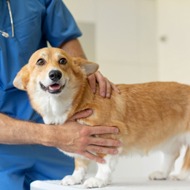
The study is the first of its kind into the condition in corgis within the UK.
A new study aimed at improving the understanding of degenerative myelopathy (DM) in corgis is set to commence at the University of Glasgow.
A debilitating disease of the spinal cord, DM affects various breeds, typically presenting at around six to eight years old. However, it is not yet possible to diagnose or treat the condition.
To investigate further, researchers and veterinary experts at the University of Glasgow are calling on owners of healthy Kennel Club-registered Pembroke or Cardigan Welsh corgis to participate in the new study.
The work will be funded by the Welsh Corgi Rescue Service, the Royal Thai Government and conducted in collaboration with Laboklin, Laboratory for Clinical Diagnostics.
DM is thought to be a result of genetic changes, as it has been linked to a gene called SOD1. A second genetic variation, a gene called SP110, is also thought to contribute to the development of the condition.
However, establishing the presence of these gene mutations in corgis is not considered a definitive diagnostic test, as not every dog with these mutations develops the condition.
The team hopes that by gathering more genetic data from corgis across the UK, they can make further insights into DM and its mechanisms.
Professor Rodrigo Gutierrez Quintana, a professor of comparative neurology at the University of Glasgow, said: “Degenerative myelopathy is a debilitating disease in corgis and other breeds, which causes a slow decline in the function of the hind limbs until, unfortunately, the dog is unable to walk without assistance.
“When dogs present with the first signs of the disease, it can be a devastating time for owners, with difficult decisions ahead. “Our hope is by carrying out in-depth research into the possible genetic factors behind degenerative myelopathy, we can shed more light on the condition and make steps towards treatment options and diagnosis.”
Image (C) Shutterstock/Fast-Stock


 Eligible members of BEVA will be able to vote for their Council team until Monday, 17 August 2026. Members will have received an election email on 17 July.



