


Major rescue operation saves mules in rural Wales
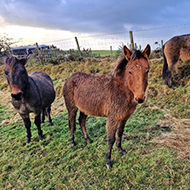
"This is a brilliant example of working together, sharing resources and expertise to ensure a positive outcome" - Hannah Bryer, The Donkey Sanctuary.
Christmas came early for a group of vulnerable mules and ponies rescued from an exposed hillside in rural Wales.
Six mules, a Shetland stallion and a pony mare were left with little shelter from the harsh winter weather following the death of their owner. One mule was found with severely overgrown hooves and in urgent need of veterinary care.
With no one able to meet their ongoing needs, time was of the essence to move the equines to safety. The Donkey Sanctuary led the mission, working alongside the Lluest Horse and Pony Trust in Carmarthenshire and members of the National Equine Welfare Council (NEWC).
A team of nine, including a vet, lorry driver and donkey care staff, battled against the elements to move the equines to safety. Using specialist handling pens, they were able to load and transport the animals to shelter.
The equines are now in the care of the Lluest Horse and Pony Trust, where they are receiving veterinary attention and specialist farriery support.
Hannah Bryer, head of welfare at The Donkey Sanctuary and a director of NEWC, said: “This was a complex operation in challenging conditions, but thanks to the collective teamwork, experience and compassion of several organisations, the mules and ponies will now benefit from immediate care, veterinary and behaviour support at Lluest. In the longer term, The Donkey Sanctuary will continue to offer advice and support during the rehabilitation of the mules”
“This is a brilliant example of working together, sharing resources and expertise to ensure a positive outcome. Being able to call on fellow NEWC members is instrumental in allowing us to reach equines in urgent need of help.”
Dionne Schuurman, equine manager at Lluest Horse and Pony Trust, said: “These mules and ponies were living in extremely exposed conditions at one of the harshest times of year, with no one able to meet their ongoing welfare needs. Getting them to safety while causing minimal stress was critical.
“We’re incredibly grateful to The Donkey Sanctuary and our fellow welfare partners for their professionalism, compassion, and teamwork. Thanks to this joint effort, all eight equines are now safe, sheltered, and beginning the careful process of assessment and rehabilitation.”
Image (C) The Donkey Sanctuary.


 A nationwide roadshow offering free, personalised parasite risk assessments and flea and tick checks will be visiting popular dog events across the UK.



