


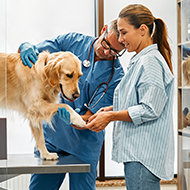
RCVS Knowledge has published the findings of a major research project.
Veterinary charity RCVS Knowledge has published findings from its first major research project on delivering and supporting contextualised care in practice.
The report comprises more than 1,000 insights from veterinary team members and dog and cat owners, showing a groundswell of support for contextualised care.
Veterinary professionals cited barriers such as a lack of continuity of care, difficulty communicating costs, and feeling discomfort when not providing “gold standard” care.
Standardised protocols and financial targets, as well as fear of regulatory scrutiny, complaints and clinical failure, were also described as getting in the way of contextualised care being delivered.
Pet owners cited emotional barriers, such as distress when their pet is unwell, and guilt when unable to afford all the treatment options. Most owners also expressed a desire for more reliable diagnosis and treatment options online, and a need for greater cost transparency.
Sally Everitt, RCVS Knowledge clinical lead for evidence, says: “It’s been so important to bring together a range of perspectives from a large number of veterinary team members and pet owners to inform these recommendations.
“The evidence base around the barriers and facilitators for contextualised care has been scant and we hope that our new research provides an evidence base that will help organisations and practices to support all vet teams to deliver care that is adapted to each animal, its owner and the wider context.”
Katie Mantell, RCVS Knowledge chief executive officer, adds: “The strength of support for the benefits of contextualised care for animals, owners and veterinary teams has been striking. There is now an opportunity for the veterinary community to pull together to build on the good contextualised care already being delivered to embed a contextualised care approach to all veterinary care.
“At RCVS Knowledge, we’re committed to working with everyone across the veterinary sector, and with pet owners, to support the translation of these recommendations into actions.”
The full report and the roadmap summarising its recommendations is available on the RCVS Knowledge website.
Image (C) Orion Production/Shutterstock.com


 A nationwide roadshow offering free, personalised parasite risk assessments and flea and tick checks will be visiting popular dog events across the UK.



