


Former BEVA president remembered
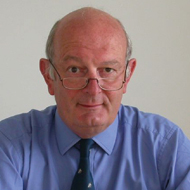
Geoff Lane was elected as president of the BEVA in 1989.
Tributes have been shared following the death of former British Equine Veterinary Association (BEVA) president Geoff Lane.
Dr Lane died at home on 30 July 2025, a few weeks after a diagnosis of metastatic cancer.
He was born on 26 January 1946, into a farming family with a history in the medical industry. His uncle, Arbuthnott Lane, was closely involved with developing the ‘no touch’ technique to keep fingers away from the surgical field.
Dr Lane soon developed an interest in veterinary surgery and, in 1969, graduated from the Royal Veterinary College in London.
After practice in Goring-on-Thames, Dr Lane’s interests in surgery led him to take the House Vet position at the Royal Veterinary College. He went on to work at Bristol University, specialising in ear, nose and throat surgery.
He taught ear, nose and throat surgery for several years at Bristol University, where he also trained many equine surgeons.
Although his early career related to small animal practice, he was often recognised for his work with horses. In 1978 he was the inaugural winner of the Richard Hartley Clinical Prize for his paper on the Treatment of Equine Sarcoids by Cryosurgery.
In collaboration with Resident Jill Richardson, Dr Lane also helped disprove theories that horse’s dentition could be used to establish their age. It was as a result of this work that Pre-Purchase Examinations require horses’ ages to be established by documentation.
In 1974 he was awarded a Fellowship of the Royal College of Veterinary Surgeons and, in 1989, he was elected president of the BEVA.
Leading the tributes to Dr Lane was Bruce Bladon, the current president of the BEVA. Dr Bladon described him as an ‘absolute inspiration’ and a ‘true gentleman’, remembering his time being supervised by Dr Lane between 1995 and 1998.
Dr Bladon said: “He showed me how rewarding a career as an equine surgeon could be. Not specifically financially, but in terms of the life, the opportunities to travel, the friends you can make around the world, the excitement of dealing with valuable athletes and watching them return to elite sport, and finally, the rewards of working with such beautiful animals.
“Without Geoff I don’t know if I would ever have managed to become an equine surgeon, and I certainly would not have enjoyed the career I have.”
Image © BEVA


 A nationwide roadshow offering free, personalised parasite risk assessments and flea and tick checks will be visiting popular dog events across the UK.



