
Your data on MRCVSonline
The nature of the services provided by Vision Media means that we might obtain certain information about you.
Please read our Data Protection and Privacy Policy for details.

In addition, (with your consent) some parts of our website may store a 'cookie' in your browser for the purposes of
functionality or performance monitoring.
Click here to manage your settings.
If you would like to forward this story on to a friend, simply fill in the form below and click send.

Your friend's email:
Your email:
Your name:
 
 
Send Cancel

‘Significant step forward’ for animal welfare in Northern Ireland
It has be illegal in Northern Ireland to mutilate any animal for cosmetic reasons since 2011.

Assembly approves to progress a ban on mutilation.

A bill to increase animal welfare protections for pets in Northern Ireland has taken a significant step forward.

On Tuesday, 1 July, The Northern Ireland Assembly approved a Legislative Consent Motion, which will enable the UK’s Animal Welfare (Import of Dogs, Cats and Ferrets) Bill to extend to Northern Ireland. 

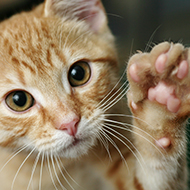
The Bill is currently progressing through Westminster, and will give DAERA the opportunity to introduce new rules restricting the import of dogs and cats that have been subject to mutilation — including de-clawing or ear cropping.

Welcoming the approval, DAERA minister Andrew Muir said: “I am committed to ensuring the highest standards of animal welfare and creating a safe environment for all pets. I welcome this approval by the Assembly which marks a significant step forward in protecting companion animals from cruel and inhumane practices.”

It has be illegal in Northern Ireland to mutilate any animal for cosmetic reasons since 2011. However, it is not against the law to buy a cat or dog from another country where these practices are still allowed.

Minister Muir added: “No animal should be subjected to mutilations for aesthetic reasons. Ear cropping or tail docking are intensely painful procedures, carried out at a young age and deliver no health or welfare benefits.

“Gaining consent today provides my Department with the ability to close any remaining loopholes in our law and it sends a message that these inhumane practices have no place in our society."

Image (C) Shutterstock.

Become a member or log in to add this story to your CPD history

Equine Disease Surveillance report released for Q4 2025

News Story 1
 The latest Equine Disease Surveillance report has been released, with details on equine disease from Q4 of 2025.

The report, produced by Equine Infectious Disease Surveillance, includes advice on rule changes for equine influenza vaccination.

Statistics and maps detail recent outbreaks of equine herpes virus, equine influenza, equine strangles and equine grass sickness. A series of laboratory reports provides data on virology, bacteriology, parasitology and toxicosis.

This issue also features a case study of orthoflavivus-associated neurological disease in a horse in the UK. 

Click here for more...
News Shorts
RCVS annual renewal fee for vets due

RCVS' annual renewal fee for veterinary surgeons is now due. Vets must pay their renewal fee before Wednesday, 1 April 2026.

This year's standard annual fee has increased to 431 from last year's 418. This is an approximately three per cent increase, as approved by RCVS Council and the Privy Council.

Tshidi Gardner, RCVS treasurer, said: "The small fee increase will be used to help deliver both our everyday activities and our new ambitious Strategic Plan, which includes aims such as achieving new legislation, reviewing the Codes of Professional Conduct and supporting guidance, and continuing to support the professions through activities such as the Mind Matters Initiative, RCVS Academy and career development."

A full breakdown of the new fees is on the RCVS website. Information about tax relief is available on the UK government website.


