


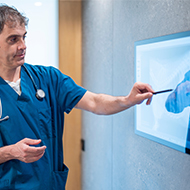
An expert panel will explore the impact of AI on veterinary services.
With artificial intelligence increasingly being used in clinical settings, a session at this year’s BVA Live is set to explore its impact on the delivery of veterinary services.
The ‘hot topic’ session, entitled The Future is Here, Are You Ready? AI in Practice Today’ comes as new statistics show one in five vets are already using AI technology in their daily work.
The figures from BVA’s Voice of the Veterinary profession survey found the most commonly reported use of AI technology was for radiography diagnostics and reporting (44 per cent) and laboratory diagnostics and reporting (27 per cent).
When it comes to communications, however, the survey found that just 11 per cent of vets are using AI to speak to clients and only seven per cent are using to help with administrative tasks.
Rob Williams, BVA junior vice president: “It’s fascinating to see how many vet teams are already using AI technology in their daily work. The massive boom in the use of these tools represents an exciting opportunity for the profession, particularly around diagnostics and interpreting large data sets.
“But as well as benefits there are clear challenges and risks, so this timely session is a great opportunity to address some of the ethical questions around the use of technology when it comes to treating animals and ensuring their welfare. It’s set to be an interesting debate, with the chance for delegates to pose questions to our incredibly knowledgeable panel, and I hope many of you will join us to add your voice to the discussion.”
The BVA Live session will bring together a panel of experts from across the profession to discuss what is happening today and how the future of practice might evolve in a world of AI.
Among the experts include Nick Jackson, director, veterinary surgeon, and council member at NGJ Locum Ltd, BVA policy officer, Ben O'Halloran, and Nicolò Frisiani, co-founder and CEO of Lupa Pets.
Vets with an interest in AI technology can join the discussion in the BVA Live Interactive Zone, at 14.00-14.45 on 12 June 2025.


 A nationwide roadshow offering free, personalised parasite risk assessments and flea and tick checks will be visiting popular dog events across the UK.



