


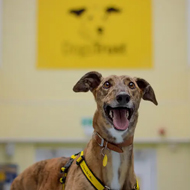
The move was announced in the Senedd on Tuesday.
Animal welfare charity Dogs Trust has hailed a commitment by the Welsh Government to ban greyhound racing in Wales as “a huge step forward in animal welfare”.
During a statement in the Senedd on Tuesday (18 Feb), deputy first minister Huw Irranca-Davies announced that he would like to introduce a ban on greyhound racing in Wales “as soon as practicably possible”.
He said: “Our consultation on a national model for animal welfare, which included questions relating to greyhounds, received over 1100 responses. In that consultation, the question asking for evidence and views on a phased ban found almost two thirds of respondents were in favour of such a ban.
“A petition to ban greyhound racing in Wales received over 35,000 signatures. This sits alongside campaign work by the Cut the Chase coalition, which includes Blue Cross, Dogs Trust, Greyhound Rescue Wales, Hope Rescue, and the RSPCA.
“We also note what is happening in other countries across the world who are taking steps to ban this activity. As a result, I believe that now is the right time to move to ban greyhound racing in Wales.”
While a timeline for the ban has not yet been announced, the Welsh Government has pledged to set up an Implementation Group that will engage with stakeholders, learn from the approaches of other countries and advise the Government on how and when a ban will come into force.
Owen Sharp, chef executive of Dogs Trust, said: “Today’s announcement that the Welsh Government is committed to ending greyhound racing marks a significant step forward for animal welfare. Over the past six years, more than 2,700 dogs have lost their lives in the UK in the name of entertainment, with many more suffering serious or life-changing injuries. This is unacceptable, and we are pleased the Senedd is ready and willing to take decisive action to prevent further deaths and injuries.
“The UK joins just four other countries worldwide where this cruel so-called sport still persists. With Wales now committed to ending greyhound racing, it’s time England, Scotland, and Northern Ireland followed suit and put a stop to this inhumane form of entertainment once and for all.”
Image (C) Dogs Trust.


 Companies marketing medicines for small pets exempt from authorisation must submit their annual return to the Veterinary Medicines Directorate (VMD) by 30 November 2026.



