


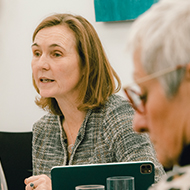
The agreed proposals include an all-appointed RCVS Governing Council.
Members of the Royal College of Veterinary Surgeons (RCVS) Council have voted on a number of proposed changes to the college's governance structure.
The agreed proposals include an all-appointed RCVS Governing Council, which will form part of the RCVS submission to the government on replacing the Veterinary Surgeons Act 1966.
During its meeting on Thursday (7 November), council members voted to retain an elected veterinary element on a future council or committee, which will report to the RCVS Council. They also agreed on a move towards greater parity between professional and lay RCVS Council members and to remove VSC appointees from the council.
It was decided that further discussion would take place concerning the future composition of the RCVS Education Committee.
Linda Belton, RCVS president, said council's decision to explore retaining an elected component within a future veterinary council or committee 'gives a clear indication of the value of our ‘Royal College that regulates’ model.'
“We have also made a further commitment to public assurance by agreeing to explore independent oversight of the RCVS,” she said. “Any future appointments process developed by the RCVS will be committed to adhering to the Public Standards Authority’s principles on appointments; these are merit; fairness; transparency and openness; and inspiring confidence.”
Voting was conducted in response to an RCVS 'Good Governance' consultation, in which a series of reform proposals were put to members of the professions and the public for comment. It received 734 responses, including 28 on behalf of representative veterinary bodies, companies, and other groups.
Council also discussed a number of alternative governance arrangement suggestions arising from submissions to the consultation, which had received varying levels of support from respondents. Two such proposals were for independent oversight of the college and to review term limits across all appointed positions. It was decided that these would both be investigated further.
Image (C) RCVS/Flickr.


 A nationwide roadshow offering free, personalised parasite risk assessments and flea and tick checks will be visiting popular dog events across the UK.



