
Your data on MRCVSonline
The nature of the services provided by Vision Media means that we might obtain certain information about you.
Please read our Data Protection and Privacy Policy for details.

In addition, (with your consent) some parts of our website may store a 'cookie' in your browser for the purposes of
functionality or performance monitoring.
Click here to manage your settings.
If you would like to forward this story on to a friend, simply fill in the form below and click send.

Your friend's email:
Your email:
Your name:
 
 
Send Cancel

Annual Battersea statistics highlight cost of living crisis
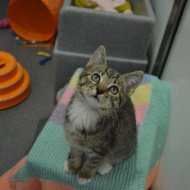
Pictured: Fir, admitted to Battersea with mother and 3 siblings under two weeks old due to financial pressures.

Figures for 2022 reflect lower rate of neutering.

Animal rescue and rehoming charity Battersea has shared the impact of the cost of living crisis on its centres, with a record number of puppies and kittens born in the charity's care in 2022.

With the increasing cost of living, Battersea believes that fewer households are getting their pet neutered, considering the procedure a non-essential expense.

Across Battersea's centres in London, Old Windsor and Brands Hatch, 133 kittens and 29 puppies were born in 2022, compared to a yearly average of 82 kittens and 16 puppies.

Centre manager Steve Craddock discussed the fewer numbers of pets getting neutered: “We suspect fewer people are getting their pets neutered, perceiving this to be a non-essential cost.

“However, we know the reality is quite different. Cats can reach sexual maturity and get pregnant at just four months old, leaving unneutered cats at a high risk of having unwanted kittens – which will be both time-intensive and costly to care for. 

“Our research estimates the average yearly cost of owning a cat is now approximately £1,500, so any unplanned litters will come with a hefty price tag attached for the average family.”

Alongside the unprecedented number of kittens and puppies born in the charity's care in 2022, a higher proportion of pets have been admitted as a direct result of financial pressures on owners.

In November 2022, 15 per cent of dogs and 10 per cent of cats were brought into Battersea by owners who stated they could no longer afford to keep their pets.


Images (C) Battersea

Become a member or log in to add this story to your CPD history

Equine Disease Surveillance report released for Q4 2025

News Story 1
 The latest Equine Disease Surveillance report has been released, with details on equine disease from Q4 of 2025.

The report, produced by Equine Infectious Disease Surveillance, includes advice on rule changes for equine influenza vaccination.

Statistics and maps detail recent outbreaks of equine herpes virus, equine influenza, equine strangles and equine grass sickness. A series of laboratory reports provides data on virology, bacteriology, parasitology and toxicosis.

This issue also features a case study of orthoflavivus-associated neurological disease in a horse in the UK. 

Click here for more...
News Shorts
RCVS annual renewal fee for vets due

RCVS' annual renewal fee for veterinary surgeons is now due. Vets must pay their renewal fee before Wednesday, 1 April 2026.

This year's standard annual fee has increased to 431 from last year's 418. This is an approximately three per cent increase, as approved by RCVS Council and the Privy Council.

Tshidi Gardner, RCVS treasurer, said: "The small fee increase will be used to help deliver both our everyday activities and our new ambitious Strategic Plan, which includes aims such as achieving new legislation, reviewing the Codes of Professional Conduct and supporting guidance, and continuing to support the professions through activities such as the Mind Matters Initiative, RCVS Academy and career development."

A full breakdown of the new fees is on the RCVS website. Information about tax relief is available on the UK government website.


