


Consider animal welfare in festive knitwear, vets urge
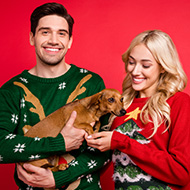
"Christmas jumpers are a bit of festive fun and cheer, but they shouldn't promote poor animal welfare" - Dr Justine Shotton, BVA.
As the nation prepares to don their festive knits for Christmas Jumper Day 2022 (8 December), vets are calling on the public to avoid buying sweaters depicting cats and dogs with extreme features.
The British Veterinary Association (BVA), which has long campaigned about using such imagery to market products and services, says that jumpers featuring brachycepahlic breeds or dogs with cropped ears 'should be left on the shelf'.
It claims that major retailers, including Marks & Spencer, Sainsbury's, Next, Joules, John Lewis and Asda, are still selling jumpers promoting animals with known welfare issues this season, despite the campaigners raising the problem in previous years.
Dr Justine Shotton, BVA senior vice president, said: “Christmas jumpers are a bit of festive fun and cheer, but they shouldn’t promote poor animal welfare.
“Flat-faced breeds and sausage dogs may seem cute, but many people are unaware of the health problems that these breeds can have, which can cause severe suffering for the animal and be costly to treat.
“We are especially concerned this year to see at least one example of a jumper showing a dog with cropped ears, an illegal practice where the tips of the dog’s ears are cut off for cosmetic reasons.”
Fuelled by the media, celebrities and advertisers, brachycepahlic breeds such as French bulldogs and pugs have soared in popularity in recent years, yet many people remain unaware of the breathing difficulties they suffer.
The BVA has been raising awareness of the issue through its Breed to Breathe campaign and is now calling on consumers to also consider how the long and low body shape of dachshounds and corgis make them prone to spinal and neurological issues.
Showing dogs with cropped ears is a huge no-no too, says the BVA. The practice is banned in the UK, and vets and animal welfare charities are campaigning via the ‘Cut The Crop’ campaign to close the legal loophole that currently allows cropped dogs to be imported from abroad.
To support its mission, the BVA has produced a template letter for concerned consumers to contact brands using brachycephalic breeds in their advertising. The letter is available at bva.co.uk
Dr Shotton added: “The British Veterinary Association would encourage anyone concerned about the promotion of unhealthy breeds or illegal mutilations on merchandise to contact the brand directly using the template letter on our website and refer to our pet advertising guidelines for more information.”


 Eligible members of BEVA will be able to vote for their Council team until Monday, 17 August 2026. Members will have received an election email on 17 July.



