


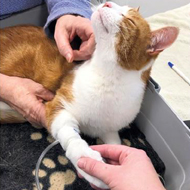
Collaboration with AAFP sees two new publications.
The International Society of Feline Medicine (ISFM) and the American Association of Feline Practitioners (AAFP) have jointly published two new Cat Friendly Guidelines for veterinary professionals worldwide.
Focussing on approach and handling techniques, and cat-friendly veterinary environments, the guidelines cover the journey to the practice, interactions with the veterinary team and the clinical environment, among other aspects of the feline veterinary experience.
Head of ISFM, Dr Nathalie Dowgray, discussed the guidelines: “We are extremely proud of our new Guidelines; they have been a lot of hard work with large amounts of literature to review and multiple time zones to work across, but the effort has been worth it.
“We hope all veterinarians working with cats will take the time to read them and apply the concepts and ideas to their clinics and to how they personally interact with their feline patients.”
Key topics covered in the guidelines include educating cat owners of reduce stress when travelling to the veterinary practice, creating an experience that considerations the cat's natural behaviour and understanding how to identify the cat's emotional state.
Heather O'Steen, CEO of AAFP, added: “We’re excited to launch these Cat Friendly Guidelines to the veterinary community.
“They will enhance feline welfare, caregiver loyalty and human safety, as well as create more positive veterinary visits for all! They will become the foundation for feline care and the veterinary experience.”
Free to read in the Journal of Feline Medicine (JFMS), the guidelines can be accessed here.
Image (C) International Society of Feline Medicine


 Eligible members of BEVA will be able to vote for their Council team until Monday, 17 August 2026. Members will have received an election email on 17 July.



