


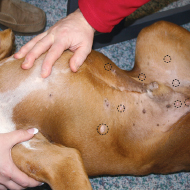
Researchers assess outcomes in dogs with Kiupel high-grade cutaneous MCTs.
The surgical removal and dissection of lymph nodes – or lymphadenectomy - significantly improves treatment outcomes for dogs with Kiepuel high-grade cutaneous mast cell tumours (MCTs), according to new research.
Published in the Journal of Small Animal Practice, the study found that lymphadenectomy – conducted as part of primary surgery alongside adjuvant therapy – significantly improves dogs' progression and survival time compared to dogs that do not undergo the procedure.
'Lack of lymphadenectomy was the only variable significantly associated with a higher risk of nodal progression,' the authors conclude. 'Lymphadenectomy, along with the resection of the primary tumour and adjuvant medical treatment, improves outcome for dogs with Kiupel high-grade cutaneous mast cell tumours and overt nodal metastasis.'
The outlook for dogs with Kiupel high-grade cutaneous MCTs has long been considered poor. In more recent studies, however, the removal of metastatic regional lymph nodes has been linked to a better prognosis in canine cutaneous MCTs.
In the study, researchers compared 31 dogs that underwent lymphadenectomy with 18 dogs that did not undergo the procedure. They found that the average progression time was significantly shorter in dogs that did not undergo lymphadenectomy (150 days) compared to the other dogs (229 days).
The collaborative study was conducted by researchers at the Universities of Bologna and Liverpool together with two Italian veterinary practices - Centro Veterinario Torinese, Turin, and Clinica Veterinaria Tibaldi, Milan.
JSAP editor Nicola Di Girolamo, said “It is really encouraging to see collaborations from multiple institutions like the study presented here. Including multiple institutions in a retrospective cohort study, does not only ensure a higher sample size but also ensures a higher generalisability of the results.
“Meaning that it is more likely that the differences observed in this study are also going to be observed at different practices and with different clinicians.”
Image © Gerry Polton Companion 2008.


 Eligible members of BEVA will be able to vote for their Council team until Monday, 17 August 2026. Members will have received an election email on 17 July.



