


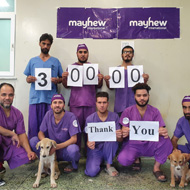
Charity is on-track to deliver a healthy, managed dog population in the country.
Mayhew is celebrating neutering 30,000 dogs in Afghanistan since the programme commenced in July 2019.
The milestone is the result of the team's work to deliver 10,000 neutered dogs per year in the city, despite COVID-19 restrictions and the subsequent regime change in the country.
The 10-strong veterinary team responsible for the programme are all Afghan vets and vet assistants, supported by teams of dog catchers, kennel assistants and the Kabul Municipality.
Fully trained by Mayhew in catching,handling and restraining the dogs – as well as pre and post-op care – the group works six days a week, averaging around 60 neutering operations a day.
Following a 48-hour recovery period, the dogs are released in the same area they were caught, in line with industry practice.,
Dr Hashimi, Mayhew Afghanistan's head vet and animal birth control (ABC) clinic manager said: "This is a massive achievement for all the Mayhew Afghanistan team at the dog population control ABC Clinic in Kabul.
“Despite the challenging circumstances they had to face, the team was able to continue the neutering programme and have now been able to neuter 30,000 dogs over three years, saving both human and animal life. We cannot thank Mayhew supporters enough for helping us to enable this to happen."
The neutering programme will remain in place in Afghanistan until 2024, when it will be reviewed to see if it has achieved its objective of having a managed, healthy dog population.
Caroline Yates, head of international projects & relations, Mayhew International, commented: "This really is monumental news for Mayhew Afghanistan. Having 30,000th dog neutered heralds the important changes that are underway in the country.
“None of this would have been able to happen without the support of Mayhew's wonderfully generous donors, including the initial set up and first year funding by Dogs Trust Worldwide and Brigitte Bardot Foundation, who for the last three years, have been our partner on the project, enabling Mayhew Afghanistan to fulfil its objectives."
She continued: "But it doesn't end here, our agreement with the Afghan authorities is for five years, so there are just over two more years of the project to run! We hope people will continue to support us and our wonderful team in Kabul as we continue the path of improving animal welfare in Afghanistan."
Image (C) Mayhew Afghanistan.


 Companies marketing medicines for small pets exempt from authorisation must submit their annual return to the Veterinary Medicines Directorate (VMD) by 30 November 2026.



