


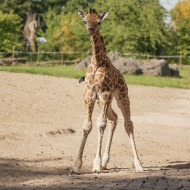
New Rothschild's giraffe looking 'healthy and content'.
A rare Rothschild's giraffe has been born at Chester Zoo, ending mum Orla's 15-month-long pregnancy.
Stanley, named after Mount Stanley, the tallest mountain in Uganda, where conservationists are working to boost numbers of giraffes, was born at 2.57am on Saturday 6 August.
The birth of Stanley is a great cause for celebration, as Rothschild's giraffes are an endangered species, with only 2,500 remaining in the wild.
Key threats to the species are loss of habitat and poaching for meat and hides, and predators to these animals include hyenas, lions, crocodiles and leopards.
Giraffe team manager at Chester Zoo, Sarah Roffe, discussed the moment that Stanley arrived: “Mum-to-be Orla was stood next to Dagmar, another experienced mum, for the delivery as she readied herself for the final push.
“Her calf then arrived into the world with quite the bump, causing the rest of the herd to jump to their feet. The excitement of a new calf suddenly appearing shortly before 3am certainly gave everyone quite the awakening!
“This two-metre high fall is a really important part of the birthing process as it’s what helps to break the umbilical cord and stimulates the calf to take its very first breath.
“While tiny in comparison to mum Orla, her new arrival was born already towering above us at 6ft tall and weighing a hefty 72kg!”
Stanley is reportedly doing well, and is looking strong and healthy.
Mike Jordan, director of animals and plants at the zoo, said: “For many years giraffes across Africa have been experiencing a silent extinction, and now the world’s tallest land mammal is one of the at-risk species.
“Having a healthy new calf on the ground here at the zoo is therefore fantastic news for the threatened species breeding programme that’s boosting numbers in conservation zoos like ours.
“In tandem with the breeding programme, our team of giraffe experts have been helping our long term partners, the Giraffe Conservation Foundation and the Uganda Wildlife Authority, to protect, monitor and, in some cases, translocate giraffes from one area of Uganda to another.”
Image (C) Chester Zoo


 Companies marketing medicines for small pets exempt from authorisation must submit their annual return to the Veterinary Medicines Directorate (VMD) by 30 November 2026.



