


Hearing loss linked to dementia in dogs, study finds
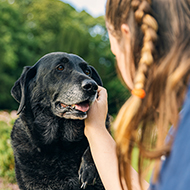
Researchers found that companionship significantly decreased as hearing worsened.
US researchers have discovered a link between hearing loss and dementia in ageing dogs.
The study by North Carolina State University could lead to new treatments for elderly dogs and improve understanding about the relationship between sensory loss and cognitive function.
Age-related hearing loss affects one-third of people over the age of 65, and the rate of cognitive decline is around 30 to 40 per cent faster on people with age-related hearing loss. Scientists say that hearing loss is a significant contributor to dementia risk than other factors such as hypertension or obesity.
To see if this also holds true for our canine companions, Professor Natasha Olby and her team assessed a group of 39 senior or geriatric dogs.
The team performed auditory and cognitive tests on each dog, and asked their owners to complete two questionnaires - one in cognitive ability and the other on quality of life. The researchers also compared cognitive testing, age and questionnaire scores between the hearing groups.
While a typical dog can easily detect tones at 50 decibels (dB), the study found that just 19 of the study group could hear at this level. Twelve dogs could hear tones at 70 dBs and eight at 90 dBs, equivalent to the sound of a jet plane taking off.
The dogs within each group were an average of 12, 13 and 14 years old, respectively.
When comparing the hearing results with the quality of life questionnaire answers, the researchers discovered that scores corresponded with vitality, and that companionship significantly decreased as hearing worsened.
Likewise, scores from the cognitive questionnaire graded dogs in the 90dB group as abnormal, compared to nine of the 12 in the 70dB group and eight of the 19 on the 50 dB group. Cognitive testing findings were similar, showing that as hearing deteriorated, so did the dogs' ability to perform tasks.
“Hearing loss is one of the biggest predictors of dementia in people,” commented Dr Olby. “Hearing loss also contributes to falls in elderly people, as sensory decline contributes to a loss in motor skills. So the connection between physical and neurological decline is clear for humans.
“This study indicates that the same connection is at work in ageing dogs. But since we can potentially treat hearing loss in dogs, we may be able to alleviate some of these other issues. By quantifying neurological and physiological changes in elderly dogs, we’re not only improving our ability to identify and treat these issues in our pets, we’re also creating a model for improving our understanding of the same issues in humans.”
The results are published in the Journal of Veterinary Internal Medicine.


 Eligible members of BEVA will be able to vote for their Council team until Monday, 17 August 2026. Members will have received an election email on 17 July.



