


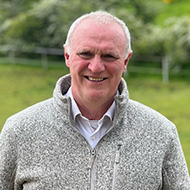
Professor Jim Anderson will help shape the development of the new SRUC veterinary school.
Scotland's Rural College (SRUC) has taken the next step in the development of its new veterinary school, appointing Professor Jim Anderson as its new head of veterinary education.
Professor Anderson, previously associate head and Professor of Veterinary Neurology and Neurosurgery at the University of Glasgow’s School of Veterinary Medicine, will play a leading role in shaping and growing Scotland’s first tertiary model of veterinary teaching and learning.
He said: “It is a hugely exciting challenge to help shape and develop this vital new service which aims to provide a sustainable, resilient foundation for clinical excellence to support the animals and communities at the heart of Scotland’s natural economy.
“It is a great privilege to take on the delivery of this aim and grow a veterinary school that is truly embedded within an institution that embodies the development of the environment and agriculture and which will be a unique offering in the UK’s veterinary education space.”
SRUC chief executive and principal, Professor Wayne Powell, added: “The appointment of someone of Jim’s calibre and experience is vital in supporting our growth agenda in this essential area.
“He is a critical element of the new school’s set-up in order to support our contribution to the development of Scotland’s natural economy as a driving force behind the promotion of resilience, diversity and sector fit among our veterinary graduates, embedding them in real-world experience and practice from the outset.
“We have already made a number of key appointments in 2022, and they have all shared their excitement in our sense of purpose and mission, and we hope to continue that trend with the next tranche of vet school posts.”
SRUC intends to fill a number of other key positions in addition to the head of veterinary education. The first of these - the director of veterianry partnerships - will lead on developing and managing a portfolio of partner clinical practices and animal enterprises to support the educational needs of students.
Other senior posts within the school and recruitment of year one veterinary lecturers are due to follow.
Image (C) SRUC.


 Companies marketing medicines for small pets exempt from authorisation must submit their annual return to the Veterinary Medicines Directorate (VMD) by 30 November 2026.



