


ZSL London Zoo hand-rears hungry penguin chicks
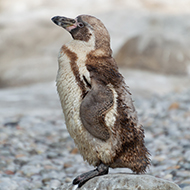
After learning to swim, the chicks will be reintroduced to the zoo's 62 other penguins.
Zookeepers at ZSL London Zoo are hand-rearing five Humboldt penguin chicks, after their parents were unable to care for them.
These hungry chicks are staying in the penguin nursery, with warm heat lamps and soft penguin cuddle toys to snuggle with, and will stay there until they are 10 weeks old under the expert care of their keepers.
The birds are weighed every single morning, and are hand-fed three times per day with 'penguin milkshake' – made of blended fish, vitamins and minerals.
Suzi Hyde, penguin keeper at the zoo, explained: “During breeding season, we check the nests on Penguin Beach every day, keeping an eye out for any chicks who might not be feeding enough or whose parents are struggling to care for their brood.
“These five chicks all had first-time parents who needed a little bit of extra support, so we were happy to swoop in – with a little help from a few soft toy penguins, donated by the Zoo shop, for them to snuggle up to.”
Once the Humboldt penguin chicks reach 10 weeks old, they'll move into London Zoo's nursery pool, where they'll learn how to swim before returning to the Penguin Beach pool with the zoo's other penguins.
“The chicks have all steadily increased in weight by 10 per cent each day, so they’re growing very quickly,” Suzi added.
“They’re always eager for their next meal and make sure we know it’s feeding time – they may be only a month old, but they’ve definitely perfected their squawk!”
All five of the soft feathered youngsters have been named in honour of British people who have achieved great things, or historic events, in the last 70 years.
The chicks have been named Hillary after Sir Edmund Hillary, the first British person to scale Mount Everest in 1953, Apollo – to mark the 1969 moon landing, Bobby – after England Captain Bobby Moore's 1966 World Cup victory, Bernie – after the inventor of the internet Tim Berners-Lee, and Mac – after Ellen MacArthur, who sailed non-stop around the world and set a new world record in 2005.
Suzi commented: “When these five chicks arrived, we decided to mark Her Majesty’s Platinum Jubilee by naming them Hillary, Apollo, Bobby, Bernie and Mac, after some of the historic moments that have taken place during her incredible reign.”


 Companies marketing medicines for small pets exempt from authorisation must submit their annual return to the Veterinary Medicines Directorate (VMD) by 30 November 2026.



