


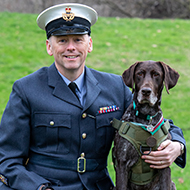
Hertz was the first dog to detect personal electronic devices in the military.
A retired sniffer dog who served in Afghanistan in 2013 has been awarded the PDSA Dickin Medal for protecting British and Allied troops.
Hertz, a ten-year-old German shorthaired pointer, is the first dog in British military history to detect electronic communications equipment, and throughout his time in Afghanistan, Hertz found over 100 items of contraband, including drugs and Personal Electronic Devices (PEDs).
PDSA director general Jan McLoughlin said of Hertz's achievement: “Hertz is a truly remarkable animal hero and a trailblazer in his field.
“His exceptional skills undoubtedly protected troops from the ever-evolving advances in digital intelligence. His actions changed the course of countless missions, saving the lives of military personnel and civilians.
“For this bravery and devotion to duty, we are honoured to welcome him as the latest recipient of the PDSA Dickin Medal.”
Hertz was bred in Croatia, and joined the Royal Air Force Police as a puppy after demonstrating extraordinary skill in drug detection. Owing to his talent for discovering contraband, Hertz was selected as the first Military Working Dog to be trained to detect the presence of PEDs.
On his very first search, Hertz discovered PEDs that were successful in supporting intelligence purposes, and secured the camp he was searching against the threat of intruder and insider attacks. He was then deployed to Helmand and Kabul with his handler Warrant Officer Jonathan Tanner, where he carried out more successful searches.
Despite a change in handler to Corporal Simon Dack at the end of Warrant Officer Jonathan Tanner's deployment, Hertz continued to carry out highly accurate and successful searches, with many of the items discovered over his career leading directly to the gathering of intelligence about potential threats and attacks on British and Allied personnel.
Provost Marshal (RAF) Group Captain Russ Foster-Jones reacted to the news of Hertz's award: “We are honoured that Hertz has been awarded the prestigious PDSA Dickin Medal.
“He is a one-of-a-kind and his story demonstrates just how important animals are to our armed forces, and the key life-saving roles that they play.
“Hertz richly deserves this honour and I think I can say from all of those that worked alongside him that we are incredibly proud that PDSA has recognised such a remarkable dog.”
Hertz is the 74th recipient of the PDSA Dickin Medal, and received his award at a special ceremony at the Royal Air Force Club in Mayfair, London, yesterday (22 February).
Images (C) PDSA


 Eligible members of BEVA will be able to vote for their Council team until Monday, 17 August 2026. Members will have received an election email on 17 July.



