


Kidney disease therapies investigated in cat study
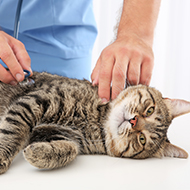
"Chronic kidney disease is debilitating for many cats and significantly lessens their quality of life" - Silke Salavati, senior lecturer in Small Animal Internal Medicine.
Researchers at The University of Edinburgh's Royal (Dick) School of Veterinary Studies are researching the effect of therapies created to alleviate chronic kidney disease in cats.
Aiming to help limit the debilitating impact of chronic kidney disease in cats, the researchers will investigate ways to prevent toxins that develop in the gut of cats with kidney disease from entering the bloodstream.
Three products which are designed to be added to food will be investigated. One is a probiotic supplement aimed at limiting the formation of gut toxins, and the other two comprise small carbon particles designed to bind to toxins in the gut.
“Simple interventions to bind toxins that originate in the guts of cats affected by chronic kidney disease, to limit the progress of the condition, may offer a viable route to alleviating the impact of the disease in millions of cats,” said Marina Domingues, resident in Small Animal Internal Medicine at Edinburgh's School of Veterinary Studies.
A small group of healthy cats will be studied first, receiving each treatment in turn, and will then be monitored for effects on health and behaviour – while urine and faecal samples will be analysed to check for changes in gut microorganism composition changes.
The second part of the study will see cats with chronic kidney disease studied, with owners given the option to administer one of the three products to their cat's food. All cats will be monitored for adverse effects, including urine and faecal testing.
Supported by the Fiona and Ian Russell Seed Corn Fund, and the Clinical Study Fund of the European College of Veterinary Internal Medicine, the study hopes to demonstrate whether the treatments are effective.


 Eligible members of BEVA will be able to vote for their Council team until Monday, 17 August 2026. Members will have received an election email on 17 July.



