


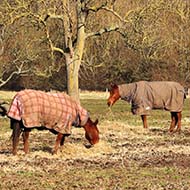
Horse owners are reminded to be careful this autumn and take steps to prevent ingestion of toxins.
The British Equine Veterinary Association (BEVA) has provided advice to horse owners, reminding to be vigilant and take action to minimise the risks of atypical myopathy this autumn.
Atypical myopathy is caused by the toxin hypoglyxin A, found most commonly in sycamore seeds in the UK, it causes muscle breakdown, and can be fatal.
BEVA has provided a series of steps for horse owners to take in order to protects their horse from the disease, these are:
Identify trees
Identify trees both around grazed fields as well as those in close proximity. Trees are often easiest to identify in the summer when in full leaf, rather than in the autumn, when leaves have largely fallen. The characteristic maple leaf shape is easy to spot, although if in doubt a test is available from the Royal Veterinary College as a result of work funded by The Horse Trust.
Collect seeds or exclude horses from affected areas
Use electric fencing or stabling.
Feed supplementary hay
Feed supplementary hay to try and prevent horses from excessive foraging for short blades of grass and inadvertent ingestion of seeds. But ensure that hay does not become contaminated by seeds.
Don’t rashly fell trees when laden with seeds
This can cause a sudden and massive contamination of the pasture. Consider local regulations, tree protection orders and tree ownership if felling is the only option.
Monitor horses carefully
Monitor horses closely even after they have been moved from affected pasture as disease can occur up to four days after exposure
Horse owners are also being reminded of the signs of atypical myopathy, including the passing of dark brown urine as a result of muscle breakdown, weakness and reluctance to move, but usually have a normal or increased appetite, and in severe cases, colic-like symptoms will be displayed owing to significant pain.
Huw Griffiths, BEVA President, said: “It’s imperative to contact your vet as a matter of urgency if you are concerned your horse may be suffering from Atypical Myopathy.
“We can use a special blood test, thanks to research funding from The Horse Trust, to diagnose and measure exposure to the toxin. The earlier we are able to intervene the more likely a favourable outcome for the horse.”


 A nationwide roadshow offering free, personalised parasite risk assessments and flea and tick checks will be visiting popular dog events across the UK.



