


Study suggests giraffe are 'socially complex'
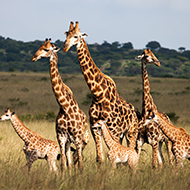
The study tested two hypotheses, firstly, that giraffe have a complex cooperative social system, and secondly, that giraffe form matrilineal societies.
Giraffes are a socially complex species, a study by scientists at the University of Bristol has found.
In a paper published recently in the Mammal Review journal, Zoe Muller, from Bristol's School of Biological Sciences, has suggested that giraffes spend up to 30 per cent of their lives in a post-reproductive state.
Muller suggests that this is comparable to other species who spend a similar amount of time in a post-reproductive state, such as elephants and killer whales, both of whom have highly complex social structures and cooperative care.
The 'Grandmother hypothesis', which suggests that female mammals live long past menopause in order to help raise future generations of offspring, is suggested by the researchers here to function in the same manner as the presence of post-reproductive adult female giraffes. This supports Muller's proposal that giraffes are likely to engage in cooperative parenting along matrillines.
Muller commented on the importance of the study: It is baffling to me that such a large, iconic and charismatic African species has been understudied for so long. This paper collates all the evidence to suggest that giraffes are actually a highly complex social species, with intricate and high-functioning social systems, potentially comparable to elephants, cetaceans and chimpanzees.
“Recognising that giraffes have a complex cooperative social system and live in matrilineal societies will further our understanding of their behavioural ecology and conservation needs.
“Conservation measures will be more successful if we have an accurate understanding of the species’ behavioural ecology. If we view giraffes as a highly socially complex species, this also raises their 'status' towards being a more complex and intelligent mammal that is increasingly worthy of protection.”


 Companies marketing medicines for small pets exempt from authorisation must submit their annual return to the Veterinary Medicines Directorate (VMD) by 30 November 2026.



