


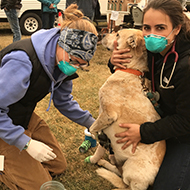
Run by UC Davis, the team will assist and care for animals during natural disasters.
Leaders at the University of California Davis (UC Davis) School of Veterinary Medicine have combined with Californian veterinary surgeons and legislators to create the California Veterinary Emergency Team.
The team has been set up in response to the difficulties in evacuating, sheltering and caring for animals due to the wildfires in California, and will function as an emergency programme to help rescue animals in disasters.
Intended to support and train a network of organisations, government agencies, and individuals, the Emergency Team, administered by the UC Davis School of Veterinary Medicine, will rescue and provide care for domestic animals and livestock.
Michael Ziccardi, director of the Oiled Wildlife Care Network, which the new programme is modelled from, commented: “We want to create a robust, coordinated effort statewide to help animals during disasters.
“The California Veterinary Emergency Team will bring together state and county agencies and organizations charged with emergency response to help them organize, train and adopt best practices.”
The need for this service in California is evident, as Californian Senator Glazer said: “Recent wildfires have overwhelmed the state’s ability to safely evacuate and care for household animals and livestock.
“Twice in the past five years we have had to call on Texas to send an emergency team to assist. That puts not just animals at risk but also increases the danger for residents and first responders if people stay behind fire lines because they fear their animals will not be cared for.
“We need this new team to help train, coordinate and lead the hundreds of volunteers who are eager to help. Our goal is a team that is ready to respond anywhere in the state with a mobile command center, a clinic if necessary, and the veterinarians, equipment and medicine to get the job done.”
Anticipated to take a significant amount of time to develop, the California Veterinary Emergency Team will be in an organizational phase during the next fire season.
© (Veterinary Emergency Response Team, UC Davis)


 Companies marketing medicines for small pets exempt from authorisation must submit their annual return to the Veterinary Medicines Directorate (VMD) by 30 November 2026.



