


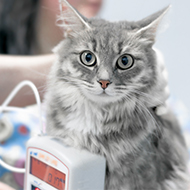
CEVA Animal Health reveals frindings from its Mercury Challenge initative.
Veterinary professionals are being encouraged to take blood pressure readings from cats to detect hypertension before clinical signs develop.
The call from CEVA Animal Health comes after the launch of its Mercury Challenge – an international health initiative in which vets across Europe were asked to take blood pressure measurements from more than 10,000 cats - 4,000 of which were in the UK.
Results of the challenge, revealed at the Ceva Cat Expertise 2021, showed more than 40 per cent of cats enrolled in the initiative were hypertensive, with a blood pressure reading 30 per cent higher than in normal cats.
This percentage suggests that feline hypertension may be more prevalent than expected, Ceva said, particularly with the mean age of hypertensive cats in the challenge being 13 years old.
Results also show that the risk of hypertension increases as cats get older, or if they have other conditions such as chronic kidney disease (CKD). One in three cats in the Mercury Challenge was diagnosed with both conditions.
On vet who participated in the Mercury Challenge was Jodie Tanner from Lime Tree Vets in Staffordshire.
Jodie said: “We were surprised by how many of the cats whose blood pressure we measured as part of the Mercury Challenge were actually hypertensive and were taken aback at the number of hypertensive cats which lacked clinical signs or target organ damage. These hypertensive cats would have previously gone undetected pror to us screening our older patients and they would probably have only presented when they had advanced target organ damage, such as blindness.
“Measuring blood pressure in cats is now incorporated into our bespoke preventative health care plan – The Pet Plus Membership – and our ‘Gold Plan’ is tailored to our patients over eight years of age. Included in the Gold Plan are twice yearly blood pressure checks, so we can pick up hypertension cases as early as possible, and the plan also includes twice yearly urine screens and yearly blood screens to pick up other common diseases seen in older cats such as hyperthyroidism and CKD.”
Feline hypertension often occurs without any early signs, and when symptoms do occur, it is often too late. The condition can seriously affect the function of the heart, brain, kidneys and eyes.
Early diagnosis is crucial to prevent severe damage. Nine out of 10 cats in the Mercury Challenge were calm and cooperative during their blood pressure readings, which lasted no longer than 10 minutes.


 Eligible members of BEVA will be able to vote for their Council team until Monday, 17 August 2026. Members will have received an election email on 17 July.



