


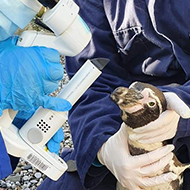
Vets and keepers pull together to treat animal despite financial impact of COVID-19.
The veterinary team at Chester Zoo has performed rare surgery to restore the sight of a four-year-old Humboldt penguin that was diagnosed with cataracts.
Keepers noticed that the penguin, named Munch, was having trouble navigating his enclosure and that his eyes had become misty. He was also swimming much slower than usual and was struggling to dive for fish at feeding time.
“Typically, Munch would confidently make his way around his home and so as soon as we noticed a change in him we immediately called in our vet team,” said parrots and penguin keeper, Sophie Bissaker.
“Penguins can live up to the age of 30 and so it’s unusual for a bird so young to develop a loss of sight but that’s where we suspected the problem might lie.”
The veterinary team discovered that Munch had cataracts, with little sight left in his left eye and no vision at all in his right. The deterioration was so severe that the team decided specialist treatment was the only option to save Munch's vision.
Veterinary ophthalmologist, Iona Mathieson, said: “I’ve been in the veterinary field for almost 24 years and Munch was the very first penguin I operated on – they’re not regular clients that’s for sure! Unfortunately, because his quality of life was impacted by the diminished sight, surgery was the only option we had available to us.
“We’re really happy to report that the surgery was successful and we are hopeful that Munch will make a full recovery.”
After surgery, Munch was kept away from the rest of the group in the main penguin pool. Though he was joined by his life partner Whurly during his recovery.
He is now back in the main penguin pool and, with daily eye drops to aid his healing, is moving and feeding more confidently every day.
Images (c) Chester Zoo.


 Companies marketing medicines for small pets exempt from authorisation must submit their annual return to the Veterinary Medicines Directorate (VMD) by 30 November 2026.



