


Managing our travel emissions
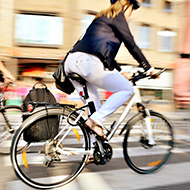
Cycling is just one of the many things we can do to cut our carbon emissions when travelling to and from the workplace.
Dr Matthew Sawyer from Vet Sustain led Friday’s third sustainability session at BSAVA Congress (25-27 March) with a whistle-stop presentation on how to cut carbon emissions when travelling to and from the workplace.
Travel is an essential part of everyday life, but the average commute soon adds up. A 2017 report found that the average employee spends around 10,000 hours across their career commuting at a financial cost of between fifty and one-hundred-and fifty thousand pounds.
Dr Sawyer explained that these long commutes can have many negative impacts on the work-life balance, such as less time with friends and family, poor work performance and, consequently, poor mental and physical health.
During his presentation, Matthew shared some interesting facts about how much we travel, the damage and impact caused by commuting to work, things we can do as individuals and business owners to reduce our environmental impact and the benefits of doing things better.
Among some of his key suggestions were:
- investing in personalised travel plans to help staff find more sustainable ways to travel
- positively promoting and encouraging walking and cycling to work
- the idea of ‘20-minute towns’ – a concept whereby staff and customers can reach you within a 20-minute walk, rather than using a car
- using your influence to discuss with local transport providers ways to ensure they improve their services to your business.
He also shared Vet Sustain’s ‘low carbon travel hierarchy’, which lists the most sustainable travel options at the top and the most damaging at the bottom. Some of the travel options detailed involve no travel at all, such as working from home and holding online meetings.
Concluding the session, Dr Sawyer said that taking such action has many benefits not only for practice owners staff but also the local neighbourhood and society as a whole.
He called for a collaborative approach to achieve a common goal of clean air to breathe and an active and healthy population, adding “we cannot allow the travel our businesses generate to contribute to poor human and planetary health."


 Companies marketing medicines for small pets exempt from authorisation must submit their annual return to the Veterinary Medicines Directorate (VMD) by 30 November 2026.



