


Finding could inform future breeding strategies in tropical countries.
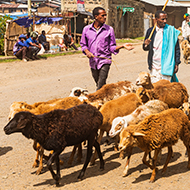
Ethiopian sheep adapt more to changes in rainfall than to other environmental factors, according to new research.
The study, published in Genome Biology and Evolution, found that genetic variations in sheep DNA are more associated with precipitation levels than temperature or altitude. It also identifies specific genes that may be involved in the adaptation to environmental factors.
It is hoped the findings could inform future management and breeding strategies in tropical countries like Ethiopia, where around a third of smallholders own sheep.
“This study provides a foundation to investigate further the effects of climate on small ruminant populations,” explained study author Dr Emily Clark of the Roslin Institute and Centre for Tropical Livestock Genetics and Health (CTLGH). “The dataset we have generated is also a valuable resource to design new genomic technologies to support Ethiopian sheep farmers and help to mitigate the effects of the changing climates we now see in tropical ecosystems.”
In the study, researchers analysed the genomes of 94 sheep from 12 regions across Ethiopia and examined them alongside climatic information for each of the geographic areas. In comparing the sheep genomes, they found more than three million minute differences in specific segments of their DNA.
Researchers then measured altitude, temperature and rainfall in each of the 12 regions to see how often these genetic variations occurred. Their analysis suggests that rainfall is more important than temperature or altitude in driving genetic adaptation in sheep.
“Ethiopia is an ideal setting to investigate environmental adaptation in livestock, owing to its large range of climatic conditions and the rich genetic diversity of its livestock," commented Dr Pam Wiener of the Roslin Institute. "By examining related sheep populations from a limited geographical region, our study was able to focus more specifically on the impact of environmental variables, giving us a greater degree of confidence in our results.”


 A nationwide roadshow offering free, personalised parasite risk assessments and flea and tick checks will be visiting popular dog events across the UK.



