


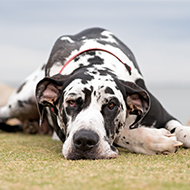
Larger breeds such as great danes are predisposed to osteosarcoma.
A new study led by the University of Bristol Veterinary School, in collaboration with Cardiff University and Royal Veterinary College (RVC), has found that larger, heavier dog breeds have an increased risk of osteosarcoma – a painful and aggressive bone tumour.
The study – published in Canine Medicine and Genetics – included 1,756 laboratory-confirmed osteosarcoma cases in dogs compared with 905,211 dogs under veterinary care in the VetCompass database during 2016.
The findings showed that twenty seven breeds, most of them larger breeds, had an increased risk of osteosarcoma compared to crossbreeds, while thirty breeds had reduced risk, including jack russell, border terrier, bichon frise, French bulldog and cavalier King Charles spaniel.
Research teams also compared various measures of body mass and leg length, confirming previous findings that heavier dogs with longer legs and longer skull shapes are at greatest risk of bone tumours.
According to the study authors, the findings that bone tumours are more common in certain breeds could inform breed health reforms, especially in predisposed breeds such as the Rottweiler, great dane and Rhodesian ridgeback, mastiff and German pointer.
Dr Dan O'Neill, senior lecturer in Companion Animals Epidemiology at the RVC, added: “There are increasing concerns about the wisdom of breeding dogs with extreme body shapes such as flat-faced breeds like French Bulldogs or breeds with long backs such as dachshunds.
“This study highlights the health risks from another extreme body shape - large body size. The breeds at highest risk of osteosarcoma were large-sized breeds such as Rottweiler, great dane and mastiff.
“To reduce the risks of picking a dog that may develop bone cancer, owners may need to consider choosing puppies from smaller-sized parents of these giant breeds or opting for different smaller breeds instead.”


 Eligible members of BEVA will be able to vote for their Council team until Monday, 17 August 2026. Members will have received an election email on 17 July.



