


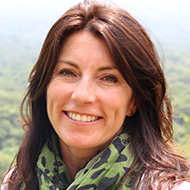
Celebrated researcher will give light-hearted insight into her recent work.
Award-winning zoologist, wildlife presenter and best-selling author Lucy Cooke has been announced as the third keynote speaker at BSAVA Virtual Congress, taking place 25 – 27 March 2021.
Lucy Cooke studied evolution and animal behaviour under Richard Dawkins at New College Oxford, going on to earn a Masters in zoology. She received a coveted Panda Award for her work as a writer/producer on Meet the Sloths, a series of viral videos that spawned a major 13-part series for Animal Planet.
She also founded the Sloth Appreciation Society, which now has over 10,000 members worldwide, and produced two best-selling books of her sloth photographs.
“I understand that the vet profession is now almost 80 per cent female so I thought it would be fun to give you a sneak preview of the content of my new book on female animals.” Said Ms Cooke.
“[Recent studies have] shown that being female covers a diverse range of physiology and behaviours - dominance, aggression, promiscuity, competitiveness - but also how females exert as much, if not more, influence on the path of evolution.”
Ms Cooke will also be highlighting her studies and subsequent fascination with sloths, animals that she believes we can learn a lot from.
“People think they are lazy and inferior animals - that have somehow escaped the rigours of natural selection.” She said, “They are actually incredibly successful - ancient creatures that have survived in one shape or another for around 60 million years precisely because they are slow. They are energy saving icons and have much to teach us about sustainable living.”
Lucy Cooke's keynote speech will take place at BSAVA Congress on Thursday morning.
“We are thrilled to welcome Lucy to her first ever BSAVA Congress,” said BSAVA president Ian Ramsey. “Her admirable research and literally slothful experiences together with her captivating talent for storytelling and humour, are sure to make this keynote presentation one of the highlights of the event.”
Image (c) BSAVA.


 Companies marketing medicines for small pets exempt from authorisation must submit their annual return to the Veterinary Medicines Directorate (VMD) by 30 November 2026.



