


FNCB 'moderately effective' at retrieving clinically-useful GI samples
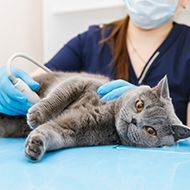
The team reviewed GI samples from 25 dogs and 19 cats obtained by fine needle cytology biopsies.
Ultrasound-guided fine needle cytology biopsies (FNCB) are moderately effective at retrieving clinically-useful samples from gastrointestinal lesions (GI lesions), according to new research.
Published in the Journal of Small Animal Practice, the study aimed to assess factors that may influence the clinical usefulness of samples collected from GI lesions by FNCB. The team reviewed GI samples from 25 dogs and 19 cats obtained by FNCB from a single institution between February 2014 to August 2016.
Researchers evaluated the clinical records to obtain historical data, clinical findings, diagnostic results and patient outcomes. Lesion thickness was categorised further as either a mass (≥20 mm thickness) or a thickening (<20mm).
The team also reviewed factors that may have influenced the retrieval of a clinically useful sample. These included the lesion location, sonographic lesion thickness, the loss of (or alteration to) the intestinal layer conspicuity on ultrasound, and the number of slides submitted to the cytologists.
Study author Dr Robert Turner, a registrar in veterinary radiology at the University of Melbourne, said: “Of the submitted cytological samples, 68 per cent (30/44) were considered clinically useful, including 11 of 18 from the stomach, eight of 12 from the small intestine, five of six from the ileocaecal junction and six of eight cases from the colon.
"The study found that both increasing lesion thickness and the number of slides submitted to the cytologists were positively associated with the odds of obtaining a clinically useful sample. In a multivariable logistic regression model, some evidence was obtained that these factors were related, but the available data was insufficient to precisely estimate their combined effect.”
JSAP editor, Nicola Di Girolamo, concluded: “The results of this study indicate that ultrasound-guided percutaneous cytology is moderately effective at retrieving clinically useful samples from GI lesions. Future research including larger, prospective studies would help to ascertain safety of this diagnostic technique, potential inter-operator variability, as well as a pragmatic comparison in terms of patient outcomes with the current standards for diagnosing GI lesions.”


 Eligible members of BEVA will be able to vote for their Council team until Monday, 17 August 2026. Members will have received an election email on 17 July.



