


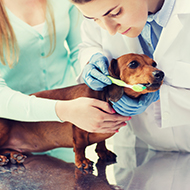
Findings can help vets and owners to choose best preventative care plan.
One of the largest ever studies to explore anonymised health records from veterinary surgeries has found that the most common health problems in dogs are dental disease, obesity and ear infections.
The study is part of the RVC’s VetCompass programme, which includes anonymised veterinary information from more than eight million UK dogs.
From this pool, a random sample of 22,333 dogs were followed for a year, researchers made note of all health issues diagnosed during this period and also analysed whether the health of dogs varied by age, sex and whether or not the dogs were neutered.
More than 65 per cent of the observed dogs had at least one disorder across the study period, with the most common health problems being dental disease – diagnosed in 12.5 per cent of the dogs – followed by ear infection (7.3 per cent) and obesity (7.1 per cent).
Male dogs had a higher risk than females for disorders including ear infections, coughing, seizures, moist dermatitis and arthritis, while females had higher risk for urinary incontinence, urinary tract infection, mammary lumps and overgrown nails.
The findings also showed that health in dogs generally deteriorates as dogs age, with older dogs generally having more health problems per year than younger dogs.
Hannah James, health research manager at the Kennel Club and co-author of the paper, said: “As dog owners, the key priority is keeping our pets healthy and happy, but it can be difficult to put into context the most common problems that affect our canine counterparts and which areas we need to pay particular attention to in order to maintain this.
“These findings help us establish these key areas, and where we as owners, vets and organisational bodies can work towards to improve the day-to-day life of our beloved companions.”


 Eligible members of BEVA will be able to vote for their Council team until Monday, 17 August 2026. Members will have received an election email on 17 July.



