


Breakthough stem cell therapy could reverse chronic canine illness
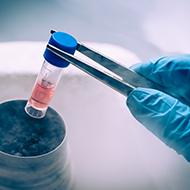
Doctors already use stem cells to fight some forms of cancer and blood-related conditions in humans.
Researchers in Japan have devised a novel method to induce stem cell generation from dog blood samples.
Scientists at Osaka Prefecture University hope to use the technique to advance regenerative therapies in veterinary medicine. This could mean that vets may one day be able to reverse conditions in dogs previously thought to be incurable.
Doctors already use stem cells to fight some forms of cancer and blood-related conditions in humans, such as leukaemia and lymphoma. Stem cells can differentiate and mature into many specialised cell types, known as 'pluripotency'.
By transplanting stem cells and guiding their differentiation into desired cell types, doctors can repair damaged tissue and reverse the course of complex conditions. But while this technique has been widely studied in humans, it has not been thoroughly explored in dogs.
In this study, the scientists worked on isolating induced pluripotent stem cells (iPSCs) from canine blood samples. iPSCs are a type of stem cell that can be “programmed” from a developed (or “differentiated”) cell by introducing a specific set of genes into them.
These genes code for proteins called 'transcription factors' that induce the change from a 'differentiated' to a 'pluripotent' stem cell, which then can mature into various cell types. The scientists found that iPSCs can proliferate very rapidly, thereby providing a reliable supply of suitable stem cells for regenerative therapies.
Study leader Shingo Hatoya, an Associate Professor from Osaka Prefecture University, said: “We successfully established an efficient and easy generation method of canine iPSCs from peripheral blood mononuclear cells”. He added that the findings have great significance for veterinary medicine and that, one day, “it may be possible to perform regenerative medicinal treatments in dogs.”
Interestingly, the study authors believe that further research into regenerative therapies for canines might have some ripple effects for human medicine. Professor Hatoya added: "Dogs share the same environment as humans and spontaneously develop the same diseases, particularly genetic diseases."
Translating findings from one field to another could pave the way to new treatments or even cures for some infections that continue to plague humanity. The findings are published in the journal Stem Cells and Development.


 Eligible members of BEVA will be able to vote for their Council team until Monday, 17 August 2026. Members will have received an election email on 17 July.



