


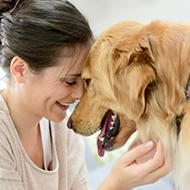
Closer relationships with women increased dogs' usefulness and 'personhood'.
A new study into the relationship between dogs and humans in different cultures throughout history has found that dogs’ relationships with women might have had a greater impact on the dog-human bond than relationships with men.
“Humans were more likely to regard dogs as a type of person if the dogs had a special relationship with women,” said Jaime Chambers, first author on the paper published in the Journal of Ethnobiology.
“They were more likely to be included in family life, treated as subjects of affection and generally, people had greater regard for them.”
Researchers from Washington State University (WSU) analysed ethnographic documents that mentioned dogs in the Human Relations Area Files database. They located data from more than 844 ethnographers writing on 144 traditional, subsistence-level societies from all over the globe.
“The truth is that human-dog relationships have not looked like they do in Western industrialized societies for most of human history, and looking at traditional societies can offer a wider vision.” Ms Chambers said.
The researchers made note of specific instances that demonstrated the usefulness of dogs to humans and vice versa, as well as times when dogs were treated like people, such as being given names, being allowed to sleep in the same beds or being mourned when they died.
The team found that a pattern emerged, showing that when women were more involved with dogs, the usefulness of humans to dogs went up along with the dogs’ 'personhood'.
Climate was also found to play a part in the usefulness of dogs to humans. The warmer an area's overall climate was, the less useful dogs tended to be to humans.
Researchers also discovered that hunting seemed to strengthen the connection between humans and dogs. In cultures that hunted with dogs, the dogs measured higher in their utility to humans and in personhood.
According to WSU, this study adds evidence to the evolutionary theory that dogs and humans chose each other, rather than the older theory that humans intentionally sought out wolf pups to raise on their own.


 Eligible members of BEVA will be able to vote for their Council team until Monday, 17 August 2026. Members will have received an election email on 17 July.



