


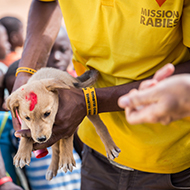
Agile vaccine scheme tackles rabies threat in Malawi
A new, adaptive approach to dog vaccination that utilises innovative smart phone technology has the potential to boost vaccination rates and ensure that more people are protected from rabies.
Veterinary surgeons working with Mission Rabies in the city of Blantyre in Malawi were able to half the time it takes to complete dog vaccination programmes by using a custom-made app which finds areas with low inoculation rates in real time.
According to the University of Edinburgh – which contributed to the project – distance from drop-in centres was the biggest reason why owners did not get their dog vaccinated against rabies.
To tackle this problem, veterinary professionals led by the University of Edinburgh and Mission Rabies developed a new approach using the app, which was created alongside the Worldwide Veterinary Service.
The team increased the number of drop-in centres within around 800 metres of owners' homes in Blantyre from 44 to 77. Research showed that most owners were willing to walk this distance.
'Roaming' vaccination centres were used in areas with low uptake and the team also reached out to local communities and media outlets to spread awareness of the scheme.
Veterinary professionals targeted 70 per cent of the city's dog population, totalling some 35,000 animals. They vaccinated them in 11 days – half the time it typically takes to complete dog vaccination programmes.
The scheme only needed 904 staff days, as opposed to 1,719.
Lead researcher Dr Stella Mazeri, veterinary epidemiologist at the University of Edinburgh’s Royal (Dick) School of Veterinary Studies, said: “Delivering vaccinations to at risk populations in a highly efficient manner is a major societal challenge. Attempts to eliminate rabies remain under funded despite knowing that dog vaccination is a highly effective way to reduce the disease burden in both humans and dogs.
“We are pleased to see that the real time interrogation of data has allowed us to improve the efficiency of vaccination clinics.”
Images (c) Mission Rabies.


 Eligible members of BEVA will be able to vote for their Council team until Monday, 17 August 2026. Members will have received an election email on 17 July.



