


New measures for registering imported Keeshonds
PHPT is a genetic disorder caused by the excessive secretion of parathyroid hormone into the blood.
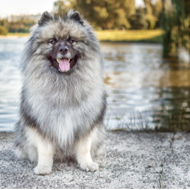
The Kennel Club has announced new measures for registering the progeny of imported Keeshonds.
Under the new measures, all imported Keeshonds, or overseas dogs being used in a UK breeding programme, must be tested for primary hyperparathyroidism (PHPT) before registration of their progeny is accepted.
Likewise, any litters produced via artificial insemination (AI) must be tested before registration to avoid wasting sperm samples from deceased dogs and the potential loss of genes.
The restrictions, which have been agreed following consultation with the Keeshond Breed Health Coordinator, come into force on 1 January 2021.
Dr Tom Lewis, genetics & research manager at The Kennel Club, said: “The Kennel Club constantly reviews DNA testing schemes in conjunction with breed clubs to ensure that breeders are supported with resources which help them to make responsible breeding decisions.
“We work alongside breed clubs and breed health coordinators in a collaborative effort to improve the health of pedigree dogs and are happy to accommodate a breed's request to tailor restrictions for a DNA test, for breeds which fit a number of suitable criteria. A formal request from the breed health coordinator or a majority request from the breed clubs is normally required to do this.”
PHPT is a genetic disorder caused by the excessive secretion of parathyroid hormone into the blood. This excess hormone causes calcium levels to rise above normal levels, leading to muscle weakness, unitary tract problems, weight loss and vomiting, but signs are often not evident until later in the dog's life.
Breed Health Coordinator, Anji Marfleet, commented: “The breed are excited that the proposal has been accepted, which will lessen the risk of untested dogs bringing PHPT into the UK population. It will also benefit breeders to raise the profile of health testing, and in particular awareness for this condition.
“The Keeshond is a small breed so the ability to use dogs from overseas, but also be aware of their hereditary status, will ensure we can maintain the gene pool for our breed and continue to breed healthy dogs. The breed are also keen to monitor and research PHPT further in the UK population, and will continue to engage in research opportunities surrounding this disease.”


 Eligible members of BEVA will be able to vote for their Council team until Monday, 17 August 2026. Members will have received an election email on 17 July.



