


“Immediate steps have been taken to limit the risk of the disease spreading” - CVO.
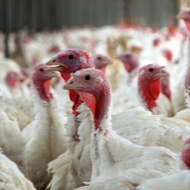
More than 10,000 turkeys will be humanely culled at a premises in North Yorkshire following the identification of highly pathogenic avian influenza H5N8 on Saturday (28 November).
A 3km Protection and 10km Surveillance Zone have been placed around the infected farm, located near Northallerton, the APHA has confirmed.
The zones replace the Temporary Control Zones on the 28 November 2020. An investigation is now underway to determine the source of the outbreak.
Chief veterinary officer (CVO), Christine Middlemiss, commented: “Avian flu has been confirmed at a commercial turkey fattening farm near Northallerton, North Yorkshire. Immediate steps have been taken to limit the risk of the disease spreading and all the remaining turkeys at the farm will be culled.
“Public Health England has confirmed that the risk to public health is very low and the Food Standards Agency advises that bird flu poses a very low food safety risk for UK consumers."
She continued: “Bird keepers should remain alert for any signs of disease, report suspected disease immediately and ensure they are maintaining good biosecurity on their premises. We are urgently looking for any evidence of disease spread associated with this farm to control and eliminate it.”
This is the sixth confirmed case of avian influenza following the identification of the disease at premises in Leicestershire, Gloucestershire, Herefordshire, Cheshire and Kent. Several wild birds across the UK have also tested positive for the disease.
In response to the rising number of cases, the UK CVOs declared an Avian Influenza Protection Zone (AIPZ) across England, Scotland and Wales. Under the AIPZ bird keepers are urged to maintain and strengthen their biosecurity measures to prevent further outbreaks of the disease.
Both Public Health England (PHE) and the Food Standards Agency continues to advise that the risk to public health from the virus remains low.
Dr Gavin Dabrera, a consultant in acute respiratory infections at PHE said: “To date, the World Health Organisation has never confirmed any cases of H5N8 in humans and the risk to the public is considered very low. As a precaution, the local Health Protection Team will offer routine health advice to those working on the farm. We will work with DEFRA to monitor the situation closely.”
A Food Standards Agency spokesperson said: "We advise that, on the basis of the current scientific evidence, avian influenzas pose a very low food safety risk for UK consumers. Properly cooked poultry and poultry products, including eggs, remain safe to eat."


 Companies marketing medicines for small pets exempt from authorisation must submit their annual return to the Veterinary Medicines Directorate (VMD) by 30 November 2026.



