


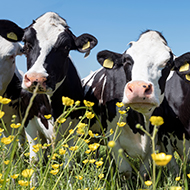
'Cutting-edge' technology to reduce environmental impact of farming
New research which will use artificial intelligence to help improve the welfare of livestock and provide cost savings for farmers across the UK has been launched.
The research will be led by AI firm Quant Foundry, the University of Bristol Vet School and Agri-EPI Centre. The project will use novel artificial intelligence methods and behavioural analytics to provide fast, reliable insights into animal health for UK farmers.
The collaborative team aims to produce a new cost-effective solution for farmers and veterinary professionals to identify illness in livestock. Helping to provide cost savings and reduce the environmental impact of farming.
Dr Chris Cormack, managing director at Quant Foundry, said: "In conjunction with our research partners, Bristol Veterinary School and Agri-EPI, the study of behavioural analytics in animals will open up a new era in artificial intelligence driven solutions for farmers.
“We have great hopes that not only can we help farmers provide improved care for their livestock but also help reduce their economic costs and their environmental impact."
Professor Andrew Dowsey, chair in Population Health Data Science at Bristol Veterinary School, added: "This collaboration is a fantastic opportunity to translate cutting-edge artificial intelligence approaches to build upon the UK’s high standards in cattle welfare and support farmers in our targets for net-zero emissions."


 Companies marketing medicines for small pets exempt from authorisation must submit their annual return to the Veterinary Medicines Directorate (VMD) by 30 November 2026.



