


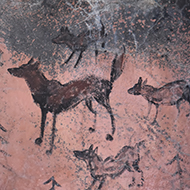
Ancient DNA provides insight into history of dogs and humans
New research carried out by scientists at the Francis Crick Institute, University of Oxford and the University of Vienna has revealed that different types of dogs existed more than 11,000 years ago, when humans were still hunters and gatherers.
The research team sequenced ancient DNA from 27 dogs, some of which lived nearly 11,000 years ago, across Europe, the Near East and Siberia.
They found that dogs were widespread across the Northern hemisphere at this time, and there were already at least five different types of dog with distinct genetic ancestries.
The study, published in Science, involved extracting and analysing DNA from skeletal material and showed that the mixing and movement of these early dog lineages led to the dogs we know today.
Greger Larson, author and director of the Palaeogenomics and Bio-Archaeology Research Network at the University of Oxford, said: “Dogs are our oldest and closest animal partner. Using DNA from ancient dogs is showing us just how far back our shared history goes and will ultimately help us understand when and where this deep relationship began."
When comparing the evolution in dog history to changes in human evolution and existence, researchers found many cases of comparable changes, reflecting how humans would bring their dogs with them as they travelled and settled in different areas.
However, the researchers also found cases where human and dog histories did not overlap. For example, the spread of a single dog ancestry in early Europe led to a significant loss of diversity. But this major event is not mirrored in human populations and the cause of this change in European dog ancestry is still to be determined.
Ron Pinhasi, author and group leader at the University of Vienna, added: "Just as ancient DNA has revolutionised the study of our own ancestors, it’s now starting to do the same for dogs and other domesticated animals. Studying our animal companions adds another layer to our understanding of human history."
Moving forward, the teams will be extending their research if human and canine relationships, trying to uncover where and in which context dogs were first domesticated.


 Eligible members of BEVA will be able to vote for their Council team until Monday, 17 August 2026. Members will have received an election email on 17 July.



