


Report reveals 68 per cent decline in wildlife populations
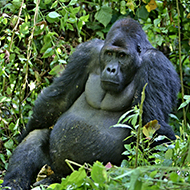
Eastern lowloand gorilla populations in the Democratic Republic of Congo have fallen by 87 per cent owing to illegal hunting.
Global wildlife populations have declined by an average of 68 per cent in less than half a century, according to new figures.
Data from the WWF's Living Planet Report reveals the decline is largely due to environmental destruction, such as unsustainable farming practices, deforestation and the illegal wildlife trade. Interestingly, these are also some of the factors responsible for the emergence of zoonotic diseases, such as COVID-19, researchers said.
Compiled by the Zoological Society of London (ZSL), the Living Planet Index (LPI) highlights factors that increase the world's vulnerability to pandemics. Researchers are now calling for urgent action to set nature 'on a path to recovery' by 2030, by bringing about an end to habitat destruction and reforming the food system.
Marco Lambertini, director-general of WWF International, said: “The Living Planet Report 2020 underlines how humanity’s increasing destruction of nature is having catastrophic impacts not only on wildlife populations but also on human health and all aspects of our lives.
“We can’t ignore the evidence – these serious declines in wildlife species populations are an indicator that nature is unravelling and that our planet is flashing red warning signs of systems failure. From the fish in our oceans and rivers to bees which play a crucial role in our agricultural production, the decline of wildlife affects directly nutrition, food security and the livelihoods of billions of people.”
He added: “In the midst of a global pandemic, it is now more important than ever to take unprecedented and coordinated global action to halt and start to reverse the loss of biodiversity and wildlife populations across the globe by the end of the decade and protect our future health and livelihoods. Our own survival increasingly depends on it.”
The 2020 Global Living Planet Index used data from almost 21,000 populations of more than 4,000 vertebrate species between 1970 and 2016. It found that eastern lowland gorilla populations in the Democratic Republic of Congo fell by 87 per cent as a result of illegal hunting.
It also found that numbers of African grey parrots in southwest Ghana fell by up to 99 per cent between 1992 and 2014 owing to threats posed by trapping for the wild bird trade and habitat loss.
Dr Andrew Terry, ZSL’s Director of Conservation, said: “The Living Planet Index is one of the most comprehensive measures of global biodiversity. An average decline of 68 per cent in the past 50 years is catastrophic, and clear evidence of the damage human activity is doing to the natural world.”
He added: “If nothing changes, populations will undoubtedly continue to fall, driving wildlife to extinction and threatening the integrity of the ecosystems on which we all depend. But we also know that conservation works and species can be brought back from the brink. With commitment, investment and expertise, these trends can be reversed.”


 Companies marketing medicines for small pets exempt from authorisation must submit their annual return to the Veterinary Medicines Directorate (VMD) by 30 November 2026.



