


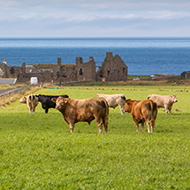
OLA members will benefit from expert information and support.
The Moredun Research Institute has announced a partnership with the Orkney Livestock Association (OLA), giving members access to research outputs, knowledge, skills and specialist expertise.
Through the partnership, OLA members will receive access to Moredun's member area which contains a wealth of information on livestock. OLA members will also be able to apply for the annual Moredun Foundation Award Scheme, with direct access to Moredon for advice on disease issues.
Karen Johnston, OLA, commented “We are delighted and very honoured to give our members the opportunity to benefit from expert information and support from such a prestigious and well-respected organisation. We are looking forward to seeing how this partnership progresses and the benefits it brings to Orkney farmers.”
With more than 12,000 members from the farming, veterinary and animal health community, Moredun's research outputs have made a significant impact both in the UK and the around the world. This is due, in part, to the unique relationship Moredun has with the farming community.
Prior to this collaboration, Moredun has taken part in several meeting and farm events in Orkney. Beth Wells, from Moredun, said: “Through these meetings, we have been fortunate to meet many of Orkney’s livestock farmers, who are well known for their high-quality beef production and we are delighted to be developing a closer working collaboration with OLA, which will be of huge benefit to both of our organisations.”
The OLA is a farmer-led organisation aimed at improving the health of Orkney’s cattle herds. The scheme was officially launched in February 2001 with a programme to eradicate BVD, which was followed by Johne’s eradication scheme in 2008.
Vet Willie Stewart, who is the chair of Moredun’s North of Scotland Regional Advisors Board, said: “The Moredun Research Institute is a world leader in the development of livestock vaccines, animal disease tests and control plans. I believe that OLA representing the cattle industry in Orkney can have a strong association with Moredun in the future."


 Companies marketing medicines for small pets exempt from authorisation must submit their annual return to the Veterinary Medicines Directorate (VMD) by 30 November 2026.



