


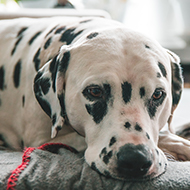
Researchers examined 26 years' worth of hearing test data.
A new study carried out by researchers at the Kennel Club and the Animal Health Trust has revealed that deafness in Dalmations declines as the result of careful breeding decisions.
Writing in the Journal of Veterinary Internal Medicine, researchers describe their study in which they examined the number of cases of deafness in Dalmatian puppies, how common it is and how this has changed over time.
The study is the largest of its kind, involving 26 years' worth of hearing test data from some 9,000 Kennel Club-registered Dalmations.
Compared to other dog breeds, Dalmatians are known to have an increased risk of deafness. This form of deafness is inherited, with the function of either one or both ears being affected.
Dogs can have their hearing checked from a young age using a BAER (Brainstem Auditory Evoked Response) test. Breeders can use the results of this test to help them select unaffected breeding dogs and reduce the risk of producing puppies with hearing loss.
In the study, researchers analysed physical descriptions of the dogs recorded during their BAER test. They found that dogs with blue eyes are at increased risk of deafness, while those with a patch of colour on their head have a decreased risk of deafness – confirming the findings of previous studies.
Over 26 years the number of dogs with blue eyes decreased, while those with a patch of colour on their head increased, the researchers found.
“Our research shows that a Dalmatian’s genes can influence its puppies’ risk of deafness,” commented Dr Tom Lewis, Quantitative Geneticist and Genetics Research Manager at the Kennel Club. “We suspect that there are a number of genes and other factors interacting and influencing a dog’s risk of hearing loss, so reducing deafness in the breed is not as straightforward as it seems.
“Analysis shows that for decades, Dalmatian breeders have been actively reducing the incidence of hearing loss in the breed by carefully selecting dogs, not only based on their ability to hear, but also other traits known to influence this. The breed clubs and breeders have done an incredible job at reducing the prevalence of hearing loss and with data from our new study, we hope can help find ways to help make an even bigger impact on the health of the breed.”


 Eligible members of BEVA will be able to vote for their Council team until Monday, 17 August 2026. Members will have received an election email on 17 July.



