


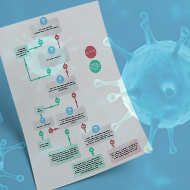
Flowchart to help practices navigate the provision of services during the pandemic
The RCVS has released new guidance to help veterinary practices decide what treatments are appropriate to carry out safely during the COVID-19 crisis.
In March, the UK government updated its list of premises that can remain open during the outbreak to include veterinary surgeries. The new RCVS framework is designed to help veterinary surgeries continue with their services while complying with the government's advice on social distancing.
The flowchart enables veterinary practices to decide whether or not to carry out a particular type of work, leaving it to their judgement on what they offer depending on their staffing level, facilities and local diseases.
Furthermore, the RCVS has updated its advice for pet owners on interacting with veterinary practices. This includes advice not to turn up to practices unannounced, and to always contact the practice in advance so that veterinary staff can assess whether attendance in person is needed or if the consultation can be carried out remotely.
RCVS president Dr Niall Connell commented: “During these difficult times we understand that, for many, their beloved pets are a comfort and a solace and that they want to make sure they remain fit and healthy. We know that what might happen if their animal falls ill is a concern for many.
“As ever, veterinary professionals are rising to the challenge by working together to find innovative ways of offering veterinary services remotely and, where attendance at a veterinary practice is absolutely necessary, reducing the risk of virus transmission through social distancing measures."
He added: “The vast majority of animal owners have been patient and understanding of the situation and the efforts their practices are going to, and I would like to thank them for that.”


 Companies marketing medicines for small pets exempt from authorisation must submit their annual return to the Veterinary Medicines Directorate (VMD) by 30 November 2026.



