


Flamingos form long-lasting friendships, study shows
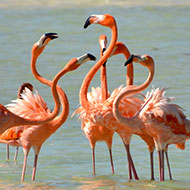
Flamingos form social bonds rather than loose, random connections.
Flamingos form long-lasting friendships, and captive flocks should contain as many birds 'as reasonably possible', according to new research.
The finding by scientists at the University of Exeter also shows that we should be careful not to separate flamingos that are closely bonded to each other.
In the study, researchers analysed data from four species of flamingo over five years. The four flocks of Caribbean, Chilean, Andean and Lesser Flamingoes were based at the WWT Slimbridge Wetland Centre in Gloucestershire.
Scientists found that, despite being highly social in flocks, flamingos consistently spend time with close “friends”. They also found that flamingos avoid spending time with certain individuals, suggesting that some flamingos don't get on with others.
Study author Dr Paul Rose, explains: “Our results indicate that flamingo societies are complex. They are formed of long-standing friendships rather than loose, random connections.
“Flamingos don’t simply find a mate and spend their time with that individual. Some mating couples spend much of their time together, but lots of other social bonds also exist.”
He added: “Flamingos have long lives – some of the birds in this study have been at Slimbridge since the 1960s – and our study shows their friendships are stable over a period of years.
“It seems that – like humans – flamingos form social bonds for a variety of reasons, and the fact they’re so long-lasting suggests they are important for survival in the wild.”
Among the social bonds found by the researchers include “married couples”, same-sex friendships and even groups of three to four close friends.
The flocks varied from just over 20 flamingos to more than 140, with bigger flocks containing a higher number of interactions.
Dr Rose said that the results could help in the management of captive flamingos.
“When moving birds from one zoo to another, we should be careful not to separate flamingos that are closely bonded to each other,” he said. “The simple lesson of this is that captive flamingo flocks should contain as many birds as reasonably possible”.
The study, 'Evaluating the social networks of four flocks of captive flamingos over a five-year-period: Temporal, environmental, group and health influences on assortment' is published in Behavioural Processes.


 Companies marketing medicines for small pets exempt from authorisation must submit their annual return to the Veterinary Medicines Directorate (VMD) by 30 November 2026.



