


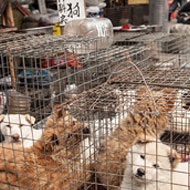
Move comes in the wake of the COVID-19 coronavirus outbreak
Shenzhen has become the first city in mainland China to permanently ban the consumption and trade of cat and dog meat in the wake of the COVID-19 coronavirus outbreak.
The food safety legislation - Shenzhen Special Economic Region Regulation on a Comprehensive Ban on the Consumption of Wild Animals – will come into effect on 1 May 2020.
Announcing the ban, a Shenzhen government spokesperson said: “… dogs and cats as pets have established a much closer relationship with humans than all other animals, and banning the consumption of dogs and cats and other pets is a common practice in developed countries and in Hong Kong and Taiwan. This ban also responds to the demand and spirit of human civilization.”
In addition to the ban on dog and cat meat, the new legislation will see fines of up to 150,000 yuan for the consumption, breeding and sale of lizards, snakes and other wild animals. Animals that can still be sold and eaten under the new legislation include pig, cattle, sheep, rabbit and chicken.
According to Humane Society International (HSI), some 30 million dogs a year are killed across Asia for meat. However, most people in China don't eat dogs, dog meat is only eaten infrequently by less than 20 per cent of the Chinese population.
Welcoming the move, Dr Peter Li, China policy specialist for animal protection charity Humane Society International, said: “With Shenzhen taking the historic decision to become mainland China’s first city to ban dog and cat meat consumption, this really could be a watershed moment in efforts to end this brutal trade that kills an estimated 10 million dogs and 4 million cats in China every year.
“The majority of these companion animals are stolen from people’s back yards or snatched from the streets, and are spirited away on the backs of trucks to be beaten to death in slaughterhouses and restaurants across China. Shenzhen is China’s fifth-largest city so although the dog meat trade is fairly small there compared with the rest of the province, its true significance is that it could inspire a domino effect with other cities following suit.”
He continued: “Most people in China don’t eat dog or cat meat, and there is considerable opposition to the trade particularly among younger Chinese. Although World Health Organization advice is clear that dogs and cats pose no known coronavirus threat whatsoever, it’s no surprise that attention is turning to this trade at this time because it undoubtedly poses a huge human health risk for other diseases such as rabies, as well as causing immense animal suffering.”
Dr Teresa M. Telecky, vice president of the wildlife department for Humane Society International, added: “Shenzhen is the first city in the world to take the lessons learned from this pandemic seriously and make the changes needed to avoid another pandemic. People around the world are suffering the impact of this pandemic because of one thing: the wildlife trade.
"Shenzhen’s bold steps to stop this trade and wildlife consumption is a model for governments around the world to emulate. We urge all governments to follow suit by banning wildlife trade, transport and consumption for any purpose.”


 Eligible members of BEVA will be able to vote for their Council team until Monday, 17 August 2026. Members will have received an election email on 17 July.



