


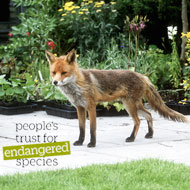
Wildlife charity urges public to aid in conservation while staying at home
The People’s Trust for Endangered Species (PTES) is calling for volunteers to assist in conservation efforts during lockdown by recording wildlife sightings in their gardens.
As part of PTES’ annual Living with Mammals survey, which began on 30 March, people are being asked to spend a little time each week recording sightings of mammals – or the signs they leave behind, such as tracks or droppings – in their gardens, or from their windows or balconies.
This information will be used to help conservationists to understand how wildlife populations are changing and will inform future conservation projects.
People in Scotland and northern England are particularly encouraged to participate, as fewer people live in these regions than in the south, so there are fewer records of mammal numbers available.
“For a species like hedgehogs, that are still widespread but whose numbers have been going down, it’s as important to get as good an idea of how they’re doing in Scotland, say, as elsewhere, where we have more records.” Explains David Wembridge, mammal surveys coordinator at PTES.
“And for species whose strongholds are in the north, these might be the majority of records we receive. Three-quarters of red squirrels, for example, and almost all pine martens, in Britain are found in Scotland. So, we’re keen to hear from anyone living there or in the north of England.”
“Surveys like Living with Mammals, which run annually, are the only way to tell if our conservation work is working, and where it’s needed. To date over 3,000 gardens across Britain have been surveyed by volunteers, which is fantastic, but we still need more records to help us understand, and encourage, the wild mammals on our doorstep.”
To take part in the 2020 survey please visit the PTES website. PTES is also encouraging the public to share their wildlife photos using #LivingWithMammals.


 Companies marketing medicines for small pets exempt from authorisation must submit their annual return to the Veterinary Medicines Directorate (VMD) by 30 November 2026.



