


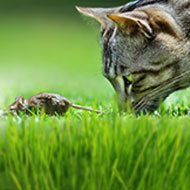
Study shows most kills take place around a cat's home
Domestic cats kill two to ten times more wildlife than wild predators, according to new research.
Scientists found that the effect is mostly concentrated around a cat's home, since much of their movement is within a 100-meter radius, and usually encompasses a few of their neighbour's gardens.
In the study, researchers from NC State University and the North Carolina Museum of Natural Sciences collaborated with scientists and citizen scientists from six countries. The team collected GPS cat-tracking data and prey-capture reports from 925 pet cats, with most coming from the U.S., U.K, Australia and New Zealand.
Lead author Roland Kays said: "Since they are fed cat food, pets kill fewer prey per day then wild predators, but their home ranges were so small that this effect on local prey ends up getting really concentrated," said Roland Kays, the paper's lead author.
"Add to this the unnaturally high density of pet cats in some areas, and the risk to bird and small mammal population gets even worse. We found that house cats have a two- to 10-time larger impact on wildlife than wild predators - a striking effect.”
The team enlisted hundreds of pet owners to track their cats to see where they went and report on the number of dead creatures they brought home. GPS tracking devices measured distances travelled by the cats, which spent their time both inside and outside.
Kays continued: "We knew cats were killing lots of animals - some estimates show that cats in North America kill from 10 to 30 billion wildlife animals per year - but we didn't know the area in which that was happening, or how this compared with what we see in nature.”
Writing in the journal Animal Conservation, the researchers calculated the amount of prey killed per year by house cats, and divided the number by the area in which the cats hunted. Some adjustments were made to the prey count, as cats don't necessarily bring all their kills home.
Their findings show that house cats kill an average of 14.2 to 38.9 prey per 100 acres, or hectare, per year. They also reveal that cats do much of their damage to wildlife in disturbed habitats, such as housing developments.
Study co-author Rob Dunn, a distinguished professor of applied ecology at NC State, said: "Because the negative impact of cats is so local, we create a situation in which the positive aspects of wildlife, be they the songs of birds or the beneficial effects of lizards on pests, are least common where we would appreciate them most.
"Humans find joy in biodiversity, but we have, by letting cats go outdoors, unwittingly engineered a world in which such joys are ever harder to experience."


 Eligible members of BEVA will be able to vote for their Council team until Monday, 17 August 2026. Members will have received an election email on 17 July.



