


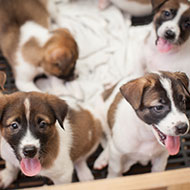
Environment minister commits to improvements following review of regulations
Welsh environment minister Lesley Griffiths has committed to improving welfare for standards for dogs at breeding premises within the country.
Her commitment follows the publication of a report, produced by the Wales Animal Health and Welfare Framework Group, reviewing the Animal Welfare (Breeding of Dogs) (Wales Regulations 2014). The report makes several recommendations to deliver improvements, including:
- greater consistency in the inspection and enforcement of breeding regulations
- a review of the licensing process, including the application of staff to adult dog ratio appropriate to the breeding premises
- the need for better welfare standards for all breeding dogs rather than only those at licensed premises.
The Welsh government has also set up a scoping project to determine what additional resource is needed. Once completed, funding for a three-year pilot scheme will be provided. This will enable expertise to be built through specialist training and upskilling of Local Authority staff.
The ban of third party sales of dogs is also supported in the review, and the minister has pledged to legislate on this issue before the end of this Senedd.
In a statement, Ms Griffiths said: “We all want to see the highest welfare standards for animals in Wales. Part of this is to drive up the welfare standards for dogs at breeding premises.
“I would like to thank the Animal Health and Welfare Group for reacting so quickly and producing their comprehensive report. Some of the recommendations can be delivered through existing legislation and I’m keen to see these progress as a matter of urgency before proposing amendments to the current Breeding Regulations.”
She continued: “The combination of new regulations on pet sales and dedicated funding for enforcement and delivery of the Breeding Regulations, will result in lasting improvements to the welfare standards of puppies bred in Wales.”
Commenting on the report, RSPCA assistant director for external relations Claire Lawson said: “The Welsh Government have shown a really strong response to this report – and we look forward to working with them to ensure local authorities are best equipped to tackle illegal and poor dog breeding, that the public understand the consequences on welfare of such practices; and that regulations are enhanced to ensure Wales loses its sad label as a bastion for the murky world of illegal or damaging, puppy breeding practices.”


 Eligible members of BEVA will be able to vote for their Council team until Monday, 17 August 2026. Members will have received an election email on 17 July.



