


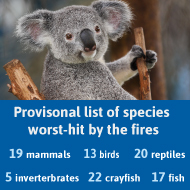
Severe habitat loss places millions at risk
The Australian government has identified 113 species that will need emergency support in the weeks and months following the bushfires that ravaged the country from 2019 to 2020.
On Tuesday 11 February, the Wildlife and Threatened Species Bushfire Recovery Expert Panel published a provisional list of animal species identified by experts as ‘the highest priorities for urgent management intervention’ over the coming months.
Expert input was provided by researchers and professionals from organisations including CSIRO; the Department of Environment, Land, Water and Planning (DELWP); and the Department of Planning, Industry and Environment (DPIE). As well as the country’s top universities.
The list includes 19 mammal, 13 bird, 20 reptile, 17 frog, five invertebrate, 22 crayfish and 17 fish species. According to the panel, almost all the species on the list had lost at least 30 per cent of their habitat in the fires.
Species were prioritised based on the amount of habitat loss they had suffered; whether they were listed beforehand as being vulnerable, endangered or critically endangered; and their vulnerability to fire based on physical, behavioural and ecological traits.
The panel stated in its report: “Many [species] were considered secure and not threatened before the fires, but have now lost much of their habitat and may be imperiled.”
Species most at risk of extinction included the Blue Mountains water skink, the Kangaroo Island dunnart and the Pugh’s frog.
Loss of habitat had been so severe for species such as the koala and the smoky mouse that ‘emergency intervention’ was needed to support their recovery.


 Companies marketing medicines for small pets exempt from authorisation must submit their annual return to the Veterinary Medicines Directorate (VMD) by 30 November 2026.



