
Your data on MRCVSonline
The nature of the services provided by Vision Media means that we might obtain certain information about you.
Please read our Data Protection and Privacy Policy for details.

In addition, (with your consent) some parts of our website may store a 'cookie' in your browser for the purposes of
functionality or performance monitoring.
Click here to manage your settings.
If you would like to forward this story on to a friend, simply fill in the form below and click send.

Your friend's email:
Your email:
Your name:
 
 
Send Cancel

US scientists find PFAS chemicals in cats and dogs
Estimated PFAS exposure levels in dogs and cats were found to be above the minimum risk level set by the U.S Agency for Toxic Substances.

Study suggests pets could be used to monitor human exposure

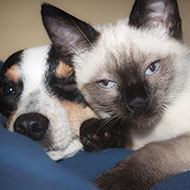
Cats and dogs excrete PFAS chemicals in their faeces above minimum risk level for humans, according to a study by the New York State Department of Health.

PFAS (Per- and polyfluoroalkyl) substances are used in carpets, non-stick pans and pizza boxes and, according to health and safety experts, have become omnipresent in the environment.


Writing in Environmental Science & Technology Letters, researchers describe how they measured 15 different PFAS in 78 samples of cat and dog faeces from the Albany area of New York.

Using a chemistry technique called liquid chromatography and mass spectrometry, they found a total of 13 different PFAS in the samples. In both dogs and cats, the most abundant compounds were perfluorocarboxylic acids.

With this knowledge, the team were able to work out the estimated PFAS exposure levels for the pets.

They found that for three compounds (perfluorooctanoic acid, PFOA; perfluorononanoic acid, PFNA; and perfluorooctanesulfonic acid, PFOS), and total PFAS, estimated exposure levels were above the minimum risk level set by the U.S Agency for Toxic Substances and Disease Registry.

The researchers say that because pets share homes with people, they could be used to monitor human exposure to PFAS.


Become a member or log in to add this story to your CPD history

SPVS and FIVP launch VSA survey

News Story 1
 SPVS and FIVP have collaborated to launch a short survey about the proposed reform of the Veterinary Surgeons Act.

The survey will ensure that each organisation's submission accurately represents the experiences of practising veterinary professionals. It will also explore awareness, use and perceived value of the roles undertaken by the RCVS.

It takes around 5-10 minutes to complete, and all responses are anonymous. The survey can be completed here until Thursday, 19 March 2026. 

Click here for more...
News Shorts
RCVS annual renewal fee for vets due

RCVS' annual renewal fee for veterinary surgeons is now due. Vets must pay their renewal fee before Wednesday, 1 April 2026.

This year's standard annual fee has increased to 431 from last year's 418. This is an approximately three per cent increase, as approved by RCVS Council and the Privy Council.

Tshidi Gardner, RCVS treasurer, said: "The small fee increase will be used to help deliver both our everyday activities and our new ambitious Strategic Plan, which includes aims such as achieving new legislation, reviewing the Codes of Professional Conduct and supporting guidance, and continuing to support the professions through activities such as the Mind Matters Initiative, RCVS Academy and career development."

A full breakdown of the new fees is on the RCVS website. Information about tax relief is available on the UK government website.

